 All over the globe, airport operators are seeking the seamless passenger experience for the traveller journey, from arrivals to departure.
Automation in airports is bringing this closer, particularly in the area of airport security.
It has been announced that the UK’s Department of Transport is looking to use automation technology for the screening of liquids, which currently are limited to just 100ml. This could mean the end of such limits in the UK, which currently has some of the strictest security measures in the world, according to a Department of Transport spokesperson.
The limit on carrying liquids onto aircraft was imposed in the summer of 2006, when a bomb plot was uncovered on a passenger flight. The chemicals were discovered in an ordinary drinks bottle, which at the time, would have been relatively simple to smuggle on board the aircraft.
The latest automated baggage screening technology uses 3D imagery, which can look at items in passenger baggage from all angles, and explosive detection technology, currently being trialled in the UK, could lead to the elimination of current liquids restrictions.
Reducing passenger security screening time
The time passengers spend in security lanes is already being reduced with the latest screening technology, and passengers are moving through these areas with greater efficiency than ever before, but, according to industry professionals, this can be improved even further with the latest in automation, enhancing passenger facilitation across the entire airport environment.
Some of the industry’s leaders, such as Rockwell Collins, have introduced solutions for passenger facilitation, including options for biometric identity management, boarding pass verification and automated border control. Using automation is universally accepted in the aviation industry as being the way forward for future travel, and passenger experience is high on the agenda.
If passengers no longer have to empty their hand luggage completely, remove liquids and other items to be screened separately, it is easy to see how this is going to speed up the process of security screening. There won’t be many passengers complaining about that!
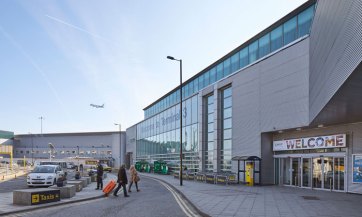 The UK’s third-busiest airport at Manchester is introducing a new drop-off charge this month in a bid to address congestion, which is currently increasing significantly. The new fee will be £3 for five minutes or £4 for 10 minutes. It is hoped that the new fee structure will reduce the number of vehicles entering the busiest parts of the airport site.
 This week, UK MPs have debated and returned with a thumbs-up for the controversial third runway project at London’s
 There are just weeks left before IATA Resolution 753 comes into force, and around the aviation industry, there are still some who are not prepared for the most stringent regulations yet in the area of baggage handling.
 It was announced a few days ago that WestJet, Canadian low-cost airline, has launched a new daily non-stop direct service from Halifax-Stanfield International Airport and the UK’s London Gatwick.
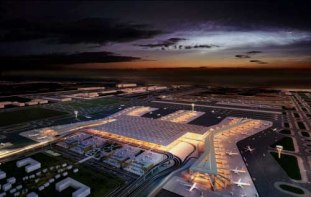 It has been announced that Yotel, the London-based hotel group, have been commissioned to build one of the largest airport hotels in the world at the almost-completed
 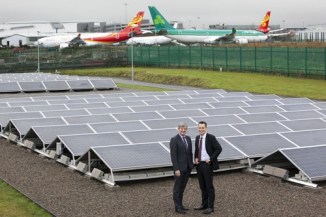 An energy agreement between DAA, the Irish airports operator, and
  The aviation pioneer and founder of Rockwell Collins, Arthur Collins, is to join more than 80 other aviation heroes to feature on Norwegian Air’s Boeing 737 MAX and 787 Dreamliner aircraft this year as a part of the airline’s Tailfin Hero program.
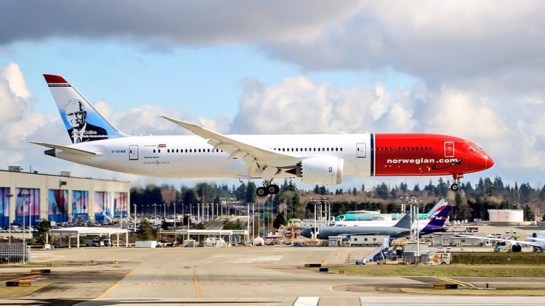 Arthur Collins will feature in the aircraft Tailfin Hero program throughout 2018.
 Las Vegas McCarran International Airport (LAS) has recently renewed a 20-year long-standing contract with Rockwell Collins to further focus on
  Business Aviation News