Archive

Tag Archives: Cabin Services

in flight wifiAviation Technical, Washington-based providers have been awarded the contract by New York-based low cost airline, JetBlue to install in-flight Wifi technology on their fleet of 130 Airbus A320 aircraft.  To installations are expected to near completion by the end of 2014.

Designed by LiveTV, who will give training and technical support to Aviation Technical Services, the technology will provide Ka-band connectivity.

JetBlue’s brand for the in-flight wifi is called ‘Fly-Fi’ and will use satellite networks for connectivity, rather than the more common Ku-band provision, which uses ground-based stations.  This will give faster and more reliable connection.

The Ka-band operates within a higher bandwidth and offering eight times more than the Ku-band, which is also more highly congested.

Other in-flight wifi providers, such as ARINC, use Iridium and Inmarsat satellite networks to provide a seamless global connectivity for their customers within the Ka-band with SwiftBroadband and their CabinConnect solutions.

emirates executive private jet charterFollowing the launch of Emirates Private Jet Service, customers can now book their luxury travel online in a tailored experience from Emirates Executive.  The Airbus 319, spacious and luxurious aircraft offers high standards and new technology to meet the needs of even the most discerning passengers.

Adnan Kazim, Emirates’ divisional senior vice president of planning, aeropolitical & industry affairs said, “Emirates Executive elevates the high standards and quality of Emirates that our customers have come to expect, with the flexibility and luxury that can only be offered by a private jet chartered flight.”

The Emirates Executive website gives visitors a chance to view a video showing the private jet aircraft that can seat up to 19 passengers and the premium features before allowing them to book the private charter travel experience that they require.

From private suites to a large lounge area, Emirates Executive offers versatility for corporations and private jet customers with two main on-board zones.

A dining and executive lounge is designed for 12 people, where passengers can enjoy a full menu of multi-course options with hot and cold beverages.  This zone also incorporates a work area, offering mobile phone connectivity, high-speed internet and video conferencing facilities.  The ‘rest zone’ with large sofas, four tables and two 42” LCD screens, has live TV and up to 1,500 on-demand channels.

There are ten private suites on-board, each equipped with a full lie-flat seat and 32” LCD TV screens.  As if that were not enough luxury, the suites are complemented by a shower spa with floor heating system.

Emirates know how to do sumptuous luxury and are aiming their new service at the growing demand for private jet travel in the sector.  Their high quality of service and attention to detail have long been associated with Emirates and Emirates Executive takes this one step further.

business aviation Bookajet

Bookajet, leading supplier of executive jets to celebrities has announced the first signs of growth in business aviation since the beginning of the recession.  This growth is a welcome move for the business aviation industry and is likened to the property sector by the MD of Bookajet, Mr Jonathan Clements, who adds, “We are pleased to say we are starting to come out of what has been a very flat and challenging time in Europe.”

It appears that charter demand in business aviation is on the increase and the arrival of new additional aircraft to the fleet has meant the creation of new jobs in the UK.

Bookajet was established in business aviation in 2003 and has bases throughout Europe, in Italy, France, the Netherlands and in Russia that deal with the charter of private jets; overseeing more than 40 aircraft, management and sales.

The newest addition to the fleet is the Gulfstream 4, a luxury executive private jet capable of long-range flight.

Private and business aviation is a steadily growing sector and is competitive, with more and more emphasis placed upon comfort and connectivity.  It is critical that business aviation stays ahead of the game in terms of affordability, maintaining high standards and allowing passengers the same levels of business availability in the air that they have on the ground.

Communications providers must remain cost-effective while offering a range of services that are combined to keep the cabin as efficiently connected as the flight deck to maintain serviceability in this competitive sector of business aviation.

in-flight wifiIt looks like the days of turning off our mobile devices on aircraft could one day be behind us as the demand grows for passenger in-flight wifi connectivity.  Many passengers now want to tweet their journey or update Facebook statuses as they fly, posting photos of the clouds, their meals or cities from the air.  Social networking, as we all know, is huge and in-flight wifi is a necessary fuel for that fire.

Recent surveys show that a quarter of British holidaying passengers out of 5,000 believe that free in-flight wifi is not only necessary, but a human right, according to HolidayExtras, although it is also recorded that 84% of these passengers are unwilling to pay the current high rates charged for in-flight wifi.

Now that the US FAA declared the use of the new models of mobile phones and device safe to use in ‘airplane mode,’ the floodgates are open in terms of demand for cheaper, faster in-flight wifi connectivity and this leaves many airlines thinking about the possibilities for revenue versus the inevitable costs involved with upgrades to their existing equipment.

Within the next few years, Inmarsat, the British satellite communications network, will be launching three new satellites, which will give global connectivity possibilities and could spell faster and cheaper in-flight wifi, but, until then, with only four commercial airlines currently offering free in-flight wifi, competition is slim and the cost implications for the passenger still high.

While business passengers enjoy the versatility of in-flight wifi, it looks to be a while before the demand is met for the average holidaymaker.

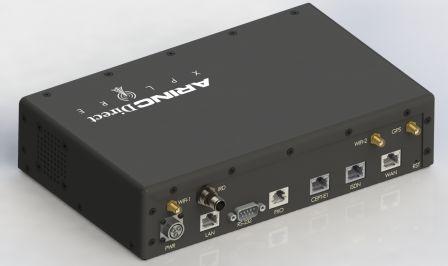
Last week in Geneva at EBACE, business aviation specialists, ARINC Direct took a step closer to a paperless cockpit with their latest innovation, Xplore, a new communications service, offering a four-in-one portable device – ACARS messaging, high-quality voice service, Blackberry email and SMS/Instant Messaging capable.

Xplore will use an iPad application for the user interface and will be user-friendly, adding the benefit of sychnronicity between two or more iPads with bluetooth technology.

ARINC Direct existing business jet-operating customers will notice that the ACARS functionality is completely interoperable with their ARINC Direct account.

“The system is so flexible and easy to use we are looking at a wider range of applications than just business jets for its use,” said ARINC director James Hardie.

ARINC Direct Xplore, using the Inmarsat and Iriudium satellite networks will enable global connectivity for the flight deck and passengers in a simple, single application.

Mr Hardie continued, “If pilots are equipped with SwiftBroadband and they use the iPad App, then they are benefitting from a dynamic aviation information platform which surpasses traditional methods of getting in flight data.”

ARINC Direct encouraged pre-ordering of their business jet innovation at EBACE and hope to complete certification to launch the live product later this year.

Xplore ACARS

ARINC Direct Xplore – ACARS

mobile broadband

Airline travellers in US airspace may soon be able to enjoy multi-gig broadband connectivity if the proposed provision of a new ATG service goes ahead.

The Federal Communications Commission (FCC) suggest, following a petition filed two years ago by Qualcomm Inc, that a new air-to-ground, two-way mobile broadband service should be introduced in the 14-14.5 GHz Ku-band, which would ensure that it would not interfere with, and also be protected from other users operating essential earth-space communications.

Of course, there is a long way to go yet, with hoops to jump through in terms of regulatory and licensing conditions, not to mention the bidding war that will ensue, once these terms are agreed, for the issue of the contracts to run the services.

If the proposals go ahead, the service will be initially limited to US airspace, but airlines from other countries will be able to offer the two-way mobile broadband service to their passengers whilst in US airspace.

The benefits of the new service will be wide for airline passengers, offering faster connectivity and maybe even a reduction in the cost of broadband services.  It seems that business aviation will be the greatest beneficiary of the new band, as this industry is the fastest growing sector, with private and corporate jets requiring speeds of connectivity for utmost efficiency in the air as on the ground in their land-based offices.

Time will tell as the industry awaits the decision makers – watch this space!

Last week, at the Hamburg Aircraft Interiors Expo, much excitement was generated by some of the innovative technological advancements set to change the in-flight cabin experience.

From a partnership with Bose, to improve in-flight entertainment with a range of noise-cancelling headphones to Twinings, for a great cup of tea, brand partnerships are a growing trend for airlines in an aim to enhance passenger comfort and experience.

The second in a stream of improvements is the issue of tablet computers to flight attendants, who are now able to be better connected and will be able, for example, to warn passengers of baggage delays or problems to save stress at the carousel.  The tablets will be connected to passenger headrest consoles, enabling them to request help or order directly from the console to the tablet.

In addition to improving passenger experience, the issue of the tablet will streamline communications to the flight deck and to ground-based personnel and will increase efficient operations, maximising the resources of staff for airlines and airports.

In Holland, KLM announced the release of their latest mobile app, following the realisation of the growth of passenger connectivity via Smartphone use.  The airline hopes to begin a free in-flight wifi trial later this year.  They will introduce real-time customer service operations for passengers to provide feedback and have problems dealt with immediately via an intranet connected to teams of iPad-bearing staff.

Virgin America is also developing a similar interactive service, with both airlines paving the way for passenger satisfaction and confidence.

Another interesting reveal at the expo was a growing market for airline and airport specific ‘souvenirs’.   Designers are using the latest trends in fashion to create mementos that passengers will want to use long after their flight experience and creating a realistic income stream for the airlines.

Take the stylish Finnair teaset, for example:

cabin trends Hamburg Expo

The Federal Communications Commission is moving to ease restrictions on Internet use in commercial airlines as the agency attempts to enhance competition in the mobile telecommunications market and help speed the deployment of Internet services onboard aircraft. Airlines will be able to test systems that meet FCC standards, establish that they do not interfere with aircraft systems and receive FAA approval.

Rather than having to license on-board systems that provide in-flight wifi on an ad hoc basis, airlines will be able to test systems that meet FCC standards, establish that they do not interfere with aircraft systems and get FAA approval. An FCC statement explained “By reducing administrative burdens on both applicants and the Commission, the new rules should allow the Commission to process ESAA applications up to 50 percent faster, enhancing competition in an important sector of the mobile telecommunications market in the United States and promoting the widespread availability of Internet access to aircraft passengers.

While the FCC is working to speed up deployment of aircraft Wi-Fi systems in airplanes, an airplane manufacturer is also testing on improvements on wireless signals in airplane cabins, making it possible for passengers to enjoy more reliable connectivity when using networked personal electronic devices in the air.

The satellite antenna will carry the signal to and from the aircraft, and mobile technologies such as Wi-Fi will provide communications within the aircraft’s hull. In addition to promoting the economic growth and job-creating impacts of inflight broadband, the action also continues the FCC’s efforts to update and streamline regulatory requirements across the agency.

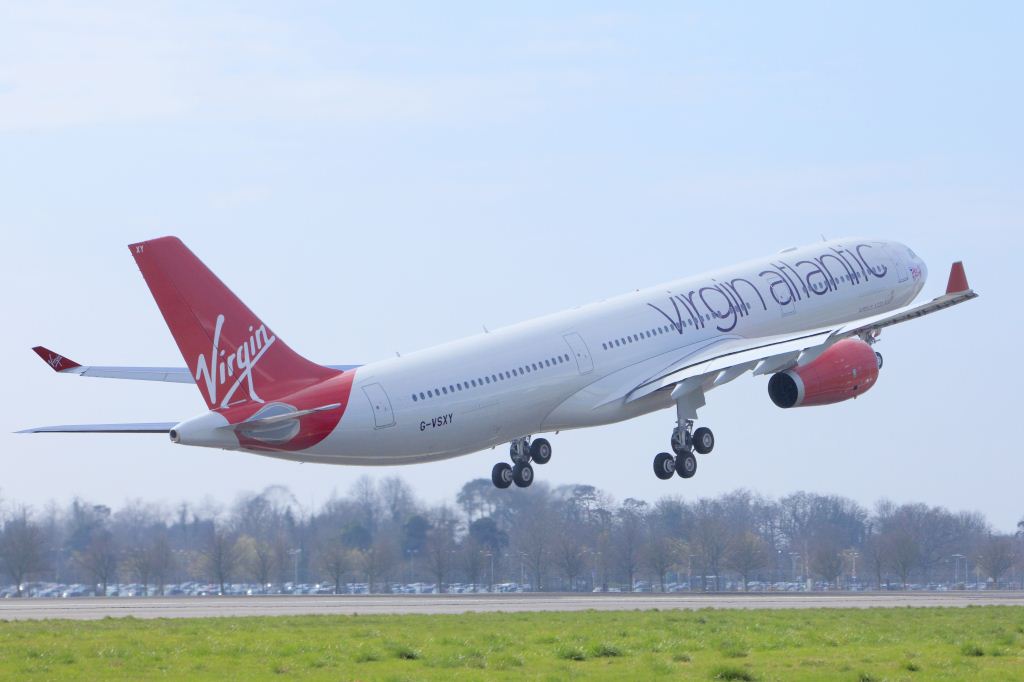
Virgin and ARINC have succeeded in various in-flight initiatives and the latest being a SwiftBroadband-enabled program that provides passengers with live audio content. The Virgin Atlantic passengers will be able to enjoy Wi-Fi connectivity to the Internet and communications products, including seatback messaging, live news and retail portals, allowing constant data connection from early 2013. The system uses a hotspot portal with bandwidth offered by Inmarsat Swiftbroadband.

“We are especially delighted that Virgin Atlantic Airways, a long-term ARINC customer for more than 12 years, is the first company to confirm it will take Cabin Connect on trial. Virgin Atlantic Airways is an airline that is internationally recognized for its strong commitment to enhanced passenger communications and as such is a perfect fit to launch Cabin Connect,” said Lee Costin, director of satellite solutions and cabin services at ARINC.

Fort more information about the Cabin Connect Solution please visit www.cabinconnect.aero.

ARINC Incorporated, a portfolio company of The Carlyle Group, provides communications, engineering and integration solutions for commercial, defence and government customers worldwide.

ARINC Cabin Connect & Virgin

The Virgin VS Airbus A330 to be the first Virgin aircraft to be fitted with ARINC’s Cabin Connect by March 2013.

ARNIC Swiftbroadband, an IP-based packet-switched service that has constant data connection is being launched with Virgin Atlantic. It benefits all passengers to access internet who can now use their own portable electronic devices via ARINC SwiftBroadband Wi-Fi Internet hotspots and providing oceanic satellite coverage. Cockpit and cabin needs, including flight plan, weather, and chart updates, as well as telephone, text messaging, e-mail, Internet and intranet access will be available.

For more information about ARINC Cabin Connect please visit their site.