Archive

Tag Archives: Business Jet

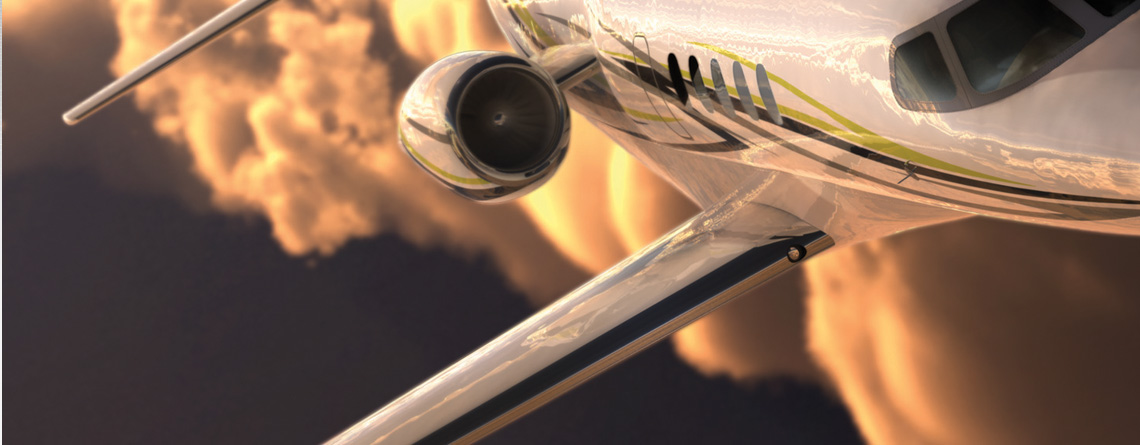
Cessna Citation Latitude RolloutCessna Aircraft Company is celebrating this week as the first production Citation Latitude is rolled out at the Kansas manufacturing facility after just three years since it was first announced to the business aviation marketplace.

FAA type certification can now proceed to the next level and is hoped for by the summer of this year.

The Latitude’s assembly has included a host of technological advancements for the industry and has been an exciting process with the latest automated robotics systems and ergonomic tooling stations.

Scott Ernest, president and Cessna CEO is delighted with their progress, “Our product investments extend beyond design and performance features of the aircraft with innovations in our manufacturing process,” he said. “The Citation Latitude team has redefined what customers should expect from a business aircraft in this segment, while also redefining the aircraft build process.”

Since making its public debut last year at the National Business Aviation Association Convention, the Latitude has been touring and making customer demonstration flights, clocking up 500 flights and 1,200 hours over the four flying aircraft.

Other Passenger In-flight Connectivity Providers for Business JetsGogo, Illinois-based global aviation communications provider, has today announced that it has received FCC regulatory approval to air its latest in-flight connectivity solution on 1000 aircraft.

Operating the 2Ku system is a big step for Gogo, with its NextGen technology, which they expect to be available after the summer of this year. Gogo say they expect the new, 4.5inch antenna to deliver peak speeds of more than 70 Mbps to the aircraft.

Michael Small, president and CEO of Gogo said, “Clearing the necessary regulatory hurdles to provide this service to an aircraft flying anywhere around the globe is no small feat. Gogo has proven it is a leader at navigating these environments for all aircraft types no matter where they fly. We are happy that the launch of 2Ku is proceeding as planned and are continuing to work with the FAA on approval for installation.”

The introduction of NextGen technology for commercial aircraft is going to be welcomed by airlines and passengers, with global expectation for in-flight connectivity growing. Currently, business aviation operators enjoy seamless connectivity through Inmarsat SwiftBroadband and Iridium satellite networks providers.

Maiden Flight for Remanufactured AircraftNathan Marker, Nextant Aerospace chief pilot and vice president of flight operations, flew the re-engined G90XT on its maiden flight on January 12th. A celebration of the marker event was held at Cuyahoga County Airport, the company’s Cleveland, Ohio headquarters.

The Nextant G90XT is a Beechcraft King Air C90A, equipped with GE H75-100 turboprop engines and follows the Beechjet 400A/Hawker 400XP as the second remanufactured aircraft in their program.

The first, 24-minute flight saw the G90XT reach a height of 8,000 ft. and around 230 knots groundspeed. The following day, a speed of 261 knots was reached out of the projected maximum capability of 280 knots with four passengers.

Sean McGeough, Nextant president and CEO, expects the flight-test program to take approximately six weeks to complete and certification to be processed during late spring. No performance figures have yet been released, but Mr Marker is said to be ‘thrilled with the performance so far.”

It has been announced that Luxaviation, Luxembourg-based business aviation operator has acquired Masterjet, Portuguese operator based in Lisbon, and operating business jets from Paris Le Bourget.

The acquisition will make Luxaviation rank as the largest business aviation operator in Europe, with almost 100 aircraft and more than 500 employees. Luxaviation now holds six air charter businesses: Luxaviation, Luxaviation Germany, Unijet (France), Abelag (Belgium), London Executive Aviation (UK) and now Masterjet (Portugal).

Current Masterjet president, Edward Queffelec and Karol Gueremy, managing director, will remain in their positions, as Luxaviation intend to continue its strategic position by retaining operational independence of each group operator.

The acquisition was completed for an undisclosed sum.

Passenger Communications & In-Flight Connectivity Solutions for the Business Jet Flight DeckAs an industry, aviation is awash with discussion about the benefits, both safety and operational, of in-flight connectivity through e-enablement.

The business aviation sector is ahead of the game in this and many other areas, as many BIZAV operators are already utilising WiFi and in-flight connectivity, not just for passenger communications, but also for keeping the flight deck up-to-date, using the latest solutions, such as connected Electronic Flight Bags (EFBs) and increasing flight efficiency with real-time access to flight data and weather updates.

In the Middle East, cabin crew use the aircraft enhanced connectivity to save valuable time, one of the driving forces for business passengers. Using in-flight connectivity features enables cabin crew to send and receive updates, such as cabin maintenance requirements and aircraft status, which can lead to faster turnaround times, ultimately saving business aircraft operators time and money.

In-flight connectivity solutions providers for the business aviation sector make full use of the latest technology to ensure that operators around the world can streamline their operations. The commercial sector is sure to follow.

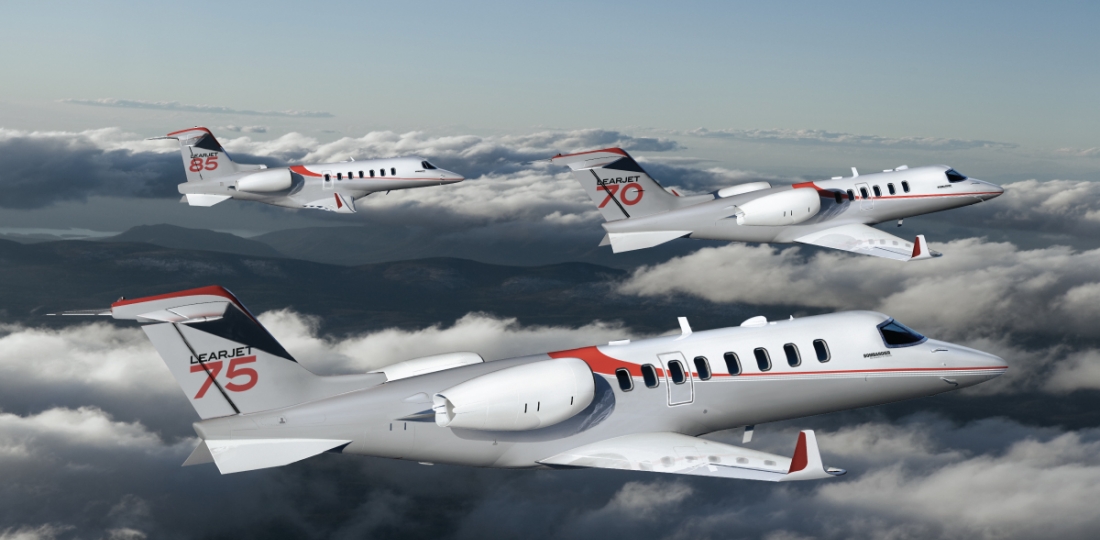
Bombarider Learjet 75 OrderBombardier ended the year on a high with an order for six Learjet 75s from an undisclosed customer worth $83 million. The order also includes an option for three more, which could mean a potential $124 million if all options are exercised.

According to Pierre Beaudoin, president and CEO of French manufacturer Bombardier, the market for lighter aircraft is taking over from the larger models. He revealed that 16 Learjets were delivered by September last year, compared with just nine in the same period of 2013.

The Learjet sector of Bombardier’s business operations continues to lead with the 70 and 75 models with the introduction of the Learjet 85 on the horizon.

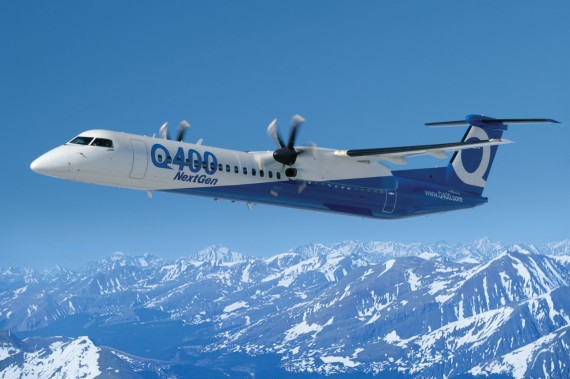
GE Capital Order the Bombardier Q400 NextGenThe year is off to a great start for Bombardier as GE Capital Aviation Services sign a purchase agreement with an order value of $160 million for five of its Q400 NextGen aircraft. The company announced that options have been taken on 10 additional aircraft, which could mean that the GECAS order could reach $448 million, based upon the current list price of the Q400.

The stunning large turboprop aircraft has seating for up to 86 passengers and is optimised for short-haul flights. It is cited as being the most efficient modern turboprop with the lowest seat-mile costs in the short-haul regional marketplace.

In a statement from Norman C.T. Liu, GE Capital Aviation Services CEO and president, the decision-making process for the Q400 is clear. “As we continue to grow our leasing fleet, we are pleased to be adding up to 15 more Q400 NextGen aircraft,” he said. “We have seen a growing demand for turboprop aircraft worldwide and the Q400 NextGen aircraft is ideally positioned to meet the needs of regional airlines now and in the future.”

Dassault Falcon 8X Ultra-Long-Range Business JetThe latest ultra-long-range luxury business jet from Dassault was unveiled in typical French style this month during a ceremonial dinner at their Bordeaux Merignac factory.

Olivier Villa, senior vice-president for civil aircraft said, “The program is right on schedule” as the executive aircraft was proudly showcased with barely dry paint in a launch that was described as mixing “prestige, passion for aviation and the French touch.”

As the aircraft undergoes some modifications that were highlighted during recent testing, the first flight is planned for the first quarter of next year, after each system is signed-off by Dassault’s flight test team. This is expected to be accomplished by the end of January, according to Frederic Petit, vice-president for the Falcon programs.

Three aircraft will be tested by the Falcon 8X program chief test pilot Eric Gerard and test pilot Herve Lavergne. Two of the three aircraft will be available for sale to customers after being demonstrators for approximately one year and the other will remain in Dassault’s fleet.

Rockwell Collins' ARINCDirect New Features with IntegrationFollowing the introduction of the new ARINCDirect portfolios for cabin services and flight support services at MEBA last month, it is clear that Rockwell Collins have fully integrated the business aviation arm of its empire.

Rockwell Collins’ Ascend Flight Information Solutions division has now been merged with the former ARINC Direct services to create the new Rockwell Collins’ ARINCDirect portfolio, which is a part of the Information Management Services division.

ARINC Direct has held firm the position within the business aviation community and now promises to deliver even greater use of the latest technological developments while holding true to the key ideology of their core business practices which has made them an industry leader over the past decade.

Rockwell Collins’ ARINCDirect highlighted four key technologies at MEBA this year:

  • Integrated weight-and-balance/performance calculations in the improved iPad application
  • A new fuel tankering feature
  • Integration with Rockwell Collins’ Flight Operations System (FOS) software
  • New passenger and flight crew connectivity solutions

Combining the proven flight planning tools and flight support services with Rockwell Collins’ own solutions, the integrated services are now designed to fit every segment of the industry, offering owners and operators flexibility with solutions that can be ‘scalable to fit the mission’ according to Brian Kruger, senior director of the ARINCDirect unit.

Providers of Aircraft Tracking Services for Business AviationThe European Space Agency (ESA) have outlined the Iris program this week in a collaboration with the Single European Sky ATM Research Joint Undertaking (SESAR JU) program, with a view to increasing the efficiency of global aircraft tracking through a satellite-based communications system.

Making improvements to future Air Traffic Management techniques is a key part of the initiative and Iris will potentially leverage a satellite-based system with current VHF ground-based communications systems that may bear the weight of overcrowded airwaves in the near future. It is planned that data link channels and ATM operations will become accessible and give new opportunities for aircraft tracking in a four-dimensional capacity – latitude, longitude, altitude and time. The system is known as 4-D trajectory management and it is hoped that it will be fully accessible by 2018.

In spite of various delays with upgrades to aircraft, the Iris program is designed to dramatically improve communications and bring the increased efficiency to operational productivity that has been sought by airlines, ATM and operators for more than 20 years.

Aircraft tracking via satellite communications will work in real time and use aircraft positioning reports, in addition to the complement of voice communications. Both continental and oceanic airspaces will be reliably covered to give truly global, uninterrupted coverage.

Business aviation enjoys the reliability of real-time aircraft tracking with providers delivering a satellite communications service over a robust system architecture, such as the Rockwell Collins’ ARINCDirect service, which provides seamless coverage via Inmarsat SwiftBroadband and Swift64 in conjunction with Iridium satellite communications. Real-time flight tracking is a sought-after service that is growing in demand, particularly since the disappearance of flight MH370 earlier this year.

As air traffic grows, demand upon the airways increases and the latest technological developments are needed to ensure utmost safety and reliability for all aircraft, both commercial and private.