Archive

Tag Archives: aviation

LAX Automated Passenger Screening | Airport Security News

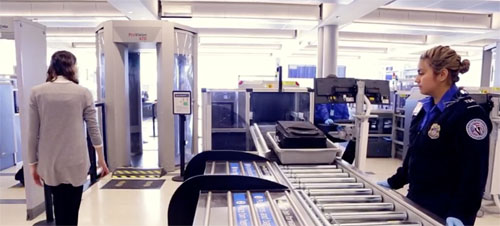
Los Angeles International Airport (LAX) has almost reached its goal of opening 14 Automated Passenger Screening lines with just two units to go in the Tom Bradley International Terminal (TBIT).

The new automated screening lines (ASLs), installed as part of a program with Los Angeles World Airports and the TSA, are expected to increase passenger screening by up to 30% compared to the previous systems, and will help to improve passenger experience.

According to Los Angeles World Airports (LAWA), the new ASLs will provide ‘the foundation for future security enhancements’ and deliver faster, more efficient passenger security and screening. The new system gives greater flexibility and decreases passenger waiting times with the opportunity for up to five travellers being able to deposit their items in trays simultaneously without waiting for the previous passenger to pass through first.

The project to replace the current system began in summer last year, and has, according to LAWA, been completed ahead of the planned schedule and under budget.

Keith Jeffries, federal security director for the TSA at LAX said, ‘The completion of the Automated Screening Lane project at TBIT is indeed a milestone that was reached because of the outstanding partnership between TSA and LAWA. TSA pledges to continue its focus on security operations while embracing innovative technologies.’

Another benefit of the ASLs is that they are large enough to hold an onboard bag and 25% larger than a standard screening tray. In addition, the trays have RFID tagging in place, to ensure traveller-baggage accountability through the screening process.

This latest project takes LAX’s total number of ASLs to 27, including those located in Terminals 2, 4 and 7.

International travellers from around the world are recognising the benefits of automation across the airport environment. The latest technology in airport automation is reducing waiting times and ground delays and improving operational productivity across every critical process, including passenger check-in, baggage handling and security screening.
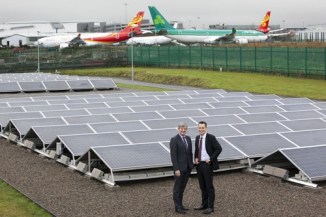
Solar Farm at Dublin Airport | Airports NewsAn energy agreement between DAA, the Irish airports operator, and ESB energy provider has resulted in the opening of a 268-panel-strong solar farm at Dublin Airport.

The solar farm has been installed on top of a reservoir system, which provides 500 million litres of water to the passenger terminals, offices and businesses located on the airport grounds. The new solar farm is expected to deliver over half the airport’s energy requirements of the water system.

The agreement was put in place to attempt to achieve energy targets of a 33% reduction in consumption for the airport by 2020, and the partners have been working closely together to determine the opportunities to implement low carbon technologies.

This achievement will also build on Dublin Airport’s current reputation in a European carbon management certification program, under which it is already Airport Carbon Accredited.

Dalton Phillips, DAA’s Chief Executive, said, ‘Over the past three years Dublin Airport succeeded in reducing its carbon footprint by 5,000 tonnes, which is equivalent to a 10% reduction in carbon emissions under its control.

We are looking forward to building on this performance and making even more energy savings that will also benefit the travelling public through sustainable environmental performance and annual cost savings.’

Arthur Collins | Aviation NewsThe aviation pioneer and founder of Rockwell Collins, Arthur Collins, is to join more than 80 other aviation heroes to feature on Norwegian Air’s Boeing 737 MAX and 787 Dreamliner aircraft this year as a part of the airline’s Tailfin Hero program.
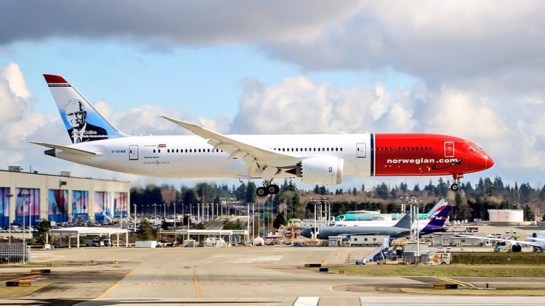
Norwegian Air’s Tailfin Hero program has been part of its identity since 2002, when it began.

Our tailfin hero program was created to honour individuals who have pushed boundaries, made a difference and inspired others,’ said Thomas Ramdahl, chief commercial officer at Norwegian Air. ‘Through our partnership with Rockwell Collins, we learned of Arthur Collins’ story, whose innovative spirit reflects those characteristics, making him a perfect tailfin hero and part of the Norwegian family.’

Arthur Collins founded today’s aviation giant, Rockwell Collins, at the age of 15 in his basement with his ham radio, following the achievement of his radio license in 1923. The original company was called Collins Radio Company, was formally incorporated in 1933 and designed and produced shortwave radio equipment.

He gained fame in 1925 by reaching John Reinartz using his radio system, who was in Greenland on a scientific expedition and had lost contact with the US Navy. The young Arthur Collins would famously ride his bicycle down to the Cedar Rapids telegraph office to relay the messages he received about daily scientific findings to Washington. This won him deserved acclaim and kick-started his career in earnest.

Norwegian Air Tailfin Hero | Arthur CollinsArthur Collins will feature in the aircraft Tailfin Hero program throughout 2018.

LAS Passenger Technologies | Airports BlogLas Vegas McCarran International Airport (LAS) has recently renewed a 20-year long-standing contract with Rockwell Collins to further focus on improving passenger technologies.

As a part of its Terminal 1 upgrade, LAS will replace 176 common-use self service kiosks with new units and hope to maintain its position as one of North America’s leading international airport hubs.

Our team is constantly evaluating the airport’s infrastructure and operations seeking ways to enhance customer service, maximize efficiencies and increase flexibility,’ said Samuel Ingalls, assistant director of Aviation over Information Systems for LAS. ‘Over the past two decades we have had great success in managing our soaring passenger volume through the implementation of common use processes and other cutting-edge technologies such as those provided by Rockwell Collins.

LAS will adopt and implement a range of Rockwell Collins solutions to strengthen its position and improve passenger experience:

  • ARINC cMUSE – the cloud-native passenger processing system offers increased flexibility and reduced support and implementation requirements.
  • ARINC SelfDrop – Rockwell Collins’ automated self-service baggage system is undergoing trials at LAS which will continue under the renewed contract.

Additional airport systems from Rockwell Collins will continue to be supported:

  • ARINC MUSE – the reliable CUPPS system to enhance airport operational cost-effectivity.
  • RFID bag tags – providing advanced baggage tracking features.
  • ARINC BagLinkTM – improving accuracy and efficiency for baggage loading.
  • Self-Boarding Gates – automated gate technology.
  • Local DCS – delivering a stand-alone check-in and boarding system.

Tony Chapman, senior director, Airport Systems Marketing and Strategy for Rockwell Collins said, ‘Rockwell Collins and LAS work together on a continual basis to ensure our solutions are meeting and exceeding the demands that passenger influx has on its airport operations. As we look further into the future, the integrated working team will look even closer at how biometrics and other disruptive technologies will enhance the curb-to-curb airport experience.’

Birmingham Airport Passenger Experience Investments | Airports NewsIn readiness for a busy summer period, Birmingham Airport has announced its investments to improve passenger experience in the journey through the airport, including new flight information displays and digital signage, redevelopment of security areas, boarding gates and a refurb of the current passenger waiting areas for boarding and security.
The whole airport site will enjoy some investment, as new restaurants and eateries, retail areas and a new 178-room Hilton Garden Inn are set to open later this year.

The major airport hub has experienced record growth, as have many airports around Europe during last year alone. This year will also see new long-haul routes for Birmingham, including to New York, Toronto and Boston, in addition to more short-haul destinations.

Airports all over the world are now putting more importance on passenger experience, and investments are becoming commonplace as passenger traffic increases. Infrastructure investment has been key during the last decade, to ensure a scalable approach is taken to rising passenger numbers, increasing mandatory regulations and the surge in passenger expectation.

Birmingham airport has confirmed that additional staff will be recruited in key ‘front-of-house’ locations, and the latest in digital signage will be in place before the beginning of the busy summer season.

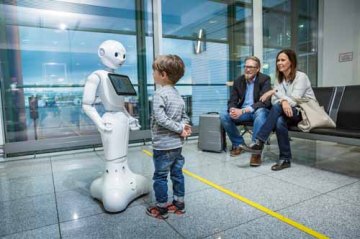
FMG,Pepper Roboter,Flughafen MünchenPassengers using Munich Airport at the moment will be greeted by its newest staff member, affectionately known as Josie Pepper. Josie is the first humanoid robot equipped with artificial intelligence, and Munich Airport and Lufthansa are very proud of her.

Josie Pepper stands just over a metre tall, and she is on duty in Terminal 2, greeting passengers as they arrive, and helping them with their enquiries. According to her creators, Josie has ‘sparkling round eyes and a pleasant voice,’ and is currently working within a test phase to gauge passenger reactions to her.

Josie has been hailed as ground-breaking, and she actually speaks to passengers, not just delivering pre-defined speech, but with a ‘brain’ that interacts with airport data via the cloud.

The idea is that she will ‘learn’ about airport systems and will gradually become more proficient with her answers to passenger questions. The system is believed to steadily improve as she learns more, which will lead to more detailed responses over time.

Josie was named by airport staff when she arrived, and was created by SoftBank Robotics, a French company. She speaks fluent English and is equipped with IBM Watson IoT artificial intelligence.

Hamburg Airport Launch Self Bag Drop Kiosks | Airports NewsPassengers flying out of Germany’s Hamburg Airport with KLM, Air France and easyJet, will now be able to enjoy an enhanced travel experience with the introduction of ten Self Bag Drop kiosks, unveiled officially for use last week.

The Director of Aviation at the airport, Johannes Scharnberg, notes that the kiosks, provided by a German supplier, have already been a success and said, ‘Already after just a short period of operation, we can see that our passengers are not having any problems with the new equipment.  And we are very happy with the system’s stability. Many of our passengers have already discovered the benefits of the kiosks for themselves and given us very positive feedback.’

Self service applications are growing in popularity for airports of all sizes around the world, increasing efficiency, improving passenger experience and moving towards a seamless airport passenger processing system.

The Self Bag Drop kiosks will eventually serve more airlines, with common-use technology and the added benefits of cost-sharing. Airport operators can also optimise resource management within the entire airport environment using self-service applications.

More than 80% of airport check-ins now happen away from the traditional terminal counter, as more and more passengers use the online check-in facility offered by most airlines. Travellers are gaining greater control of their journey and can arrive later at the airport terminal than ever before. The use of Self Bag Drop means that passengers can simply arrive with a pre-printed boarding pass, which can be scanned and used within the kiosks to produce a baggage tag that the passenger can attach themselves and send the baggage through for security screening and automated transfer to the aircraft.

Rockwell Collins’ ARINC Self Bag Drop solution – ARINC SelfDrop – can process tagged bags in as little as 10 seconds, making a clear case for enhanced efficiency and promising to transform airport terminals on a truly global scale.

Rockwell Collins Special Meeting Over Acquisition | Aviation NewsIt has been announced that Rockwell Collins shareowners voted overwhelmingly in favour of the UTC acquisition in the special meeting that took place earlier this month. More than 96% of the votes cast during the meeting were cast in support of the proposition, which represented over 72% of all shares of common stock.

Kelly Ortberg, President and CEO of Rockwell Collins said, ‘Shareowners have made clear their support for this acquisition, bringing it one step closer to reality. As Collins Aerospace, we’ll be a stronger company, with attractive aerospace product and service portfolios, and ultimately, better positioned for long-term success.

Now the proposed acquisition will require regulatory approval, and customary closing condition will need to be met, but the transaction to create the new UTC business, Collins Aerospace Systems, is expected to be completed before the end of the year.

Queue in Airport Set to Reduce with Cashless System | American Airlines Go CashlessAmerican Airlines is moving towards a cashless transaction experience in airports all over the US, as it removed cash payment options at Miami Airport this week, making the total number now 50 airports.

The airline says that moving away from cash assists its customers more efficiently, and adds, ‘It also reduces the complexity of work for our agents who will no longer have to worry about handling cash, find exact change or close out a cash drawer at the end of the day. In general, our ticket counter agents support the transition to a cashless environment.

Beginning tomorrow at Miami International Airport, passengers will be advised to bring credit and debit cards only, although, having partnered with Ready Credit, American Airlines check-in desks will have ReadyStation kiosks nearby, providing prepaid Visa debit cards up to $1,000. There will be a $5 surcharge for this service.

American Airlines spokesperson, Aran Coello, has acknowledged that this new system may cause problems for foreign passengers, rather than native Americans, but also says, ‘we have noticed that many travellers who are returning to a country where [U.S. dollars] is not the accepted currency will often add more funds to their cards as it is a cost-effective method of converting [U.S. dollars] to other currencies.

With successful operation of the scheme in 50 other locations in the US, including JFK International Airport, LaGuardia, LAX and Dallas Fort Worth International Airport, American Airlines believe that the move to a cashless environment is the right step to take in the modern airport.

Most travellers already use debit and credit cards for expenses such as excess baggage, additional flight upgrades and other necessary fees, but it is accepted that some travellers, particularly those from foreign countries, will have exchanged currency into dollars in cash for use on their journey, but the prepaid Visa debit cards will often give a much better rate of exchange for passengers.

Scotland Airports Record Busiest Year in 2017 | Airports News UKAccording to recent passenger figures, Edinburgh and Glasgow Airports have recorded that 2017 was their busiest year to date, with over 13 million people moving through Edinburgh Airport, and almost 10 million using Glasgow’s international hub.

Gordon Dewar, Edinburgh Airport’s chief exec. is delighted by the announcement, and said ‘This is a fantastic achievement for Edinburgh Airport – to welcome more than 13 million passengers is a real triumph and one that we are delighted by.

December proved to be an outstanding month, despite adverse weather conditions in the north of the UK, which saw Edinburgh Airport process more than 900,000 passengers, and Glasgow over 600,000.

Glasgow’s MD, Amanda McMillan, said ‘2017 was a fantastic year for the airport. To carry more than 9.9 million passengers is a huge achievement and testament to the hard work put in by more than 5,000 people across the airport.

Ms McMillan also added that she was pleased to have ‘considerably’ increased connectivity for Glasgow Airport, with the addition of 30 more routes and services during 2017, particularly across Europe.

Aberdeen Airport also enjoyed a great year, although not reaching record-breaking numbers for them, but passenger traffic was up 1.8% on 2016 figures. December marked the eighth consecutive month of increasing numbers for them, which gave them a total for 2017 of just over 3 million passengers. Airport officials guess that there was a strong demand for winter sun for Scotland’s residents, with a growth recorded for the winter months of 4.6% for domestic service and 8.7% for international travel.

Interestingly, there was a drop in helicopter traffic out of Aberdeen Airport last year, the reason being, according to Carol Benzie, the MD of Aberdeen Airport, who said, ‘Domestic fixed-wing traffic has driven much of the total passenger increases which has, in part, been due to chartered services being used by offshore workers to reach destinations such as Sumburgh and Wick, to then connect offshore via helicopter. This has, as a result, contributed to the decrease in helicopter passengers travelling directly from Aberdeen.