Archive

Tag Archives: aviation weather data

More About CPDLC from Leading Providers | Aviation Industry NewsA FANS 1/A STC for Bombardier’s Challenger 604 involved a collaboration of Rockwell Collins and Jet Aviation St Louis, combining experience from both companies on the airframe.

The aftermarket FANS 1/A solution package offers CPDLC compliance and ADC-C to reduce the workload for the crew on the flight deck while navigating remote global airspace and vast oceanic expanses.

As we know, CPDLC gives access to equipped aircraft to preferred tracks, further enhancing flight efficiency with the benefit of time and fuel savings. Rockwell Collins’ Pro Line Fusion avionics is a necessary suite for FANS and is already widely used.

Flight Deck Weather Solutions ProvidersAccording to major airlines, improved use of satellite and datalink communications technology has resulted in fewer incidences of turbulence and will continue to do so as more and more airlines utilise the high-performance tools at their fingertips.

Using the latest solutions for communications and navigation, airlines and traffic control have gained a greater understanding of flying conditions resulting in better flight planning and route optimisation to circumnavigate storms and minimise ground delays.

According to the Bureau of Transportation, 36% of all delays in 2013 were weather-related. This sounds like a pretty high occurrence, but when compared with the figures of 2003, they are down by a whopping 50%.

The threat of turbulence has been a challenge to airline operators, due to its invisibility on radar or satellite charts. Meteorologists at Kansas’s Aviation Weather Centre produce global weather forecasts every six hours and are now able to predict areas of turbulence using complex weather models and informative reports from pilots and sensors on some aircraft. This enables dispatchers to re-route aircraft if necessary to avoid these areas in advance and thus preventing the chaos that could ensue in busy airspace.

Using modern aviation technology it is hoped that the numbers of injuries as a result of turbulence, which has been estimated at an average of 36 people per year since 2002, according to the FAA, will be cut dramatically as reliable solutions are maintained.

Today, communications and navigation systems are streamlining not just efficient operation in the aircraft and on the ground, but are improving the entire flight experience for the passenger.

aviation weatherAn eight-month weather safety campaign has been launched this week at the Great Alaska Aviation Gathering in Anchorage, with an aim to help pilots prepare for weather issues that may arise over the coming year. The campaign, entitled ‘Got Weather?’ is to be managed by a partnership between the FAA and the GA community and will deal will a focus weather topic each month via an online portal, in addition to safety seminars and case studies.

Aviation accidents caused by adverse weather are amongst the most frequent across the world with almost 75% of these resulting in fatalities. The campaign will discuss turbulence issues, icing, high winds and thunderstorms as part of the initiative to bring enhanced awareness to GA pilots.

U.S. Transportation Secretary Anthony Foxx said, “General aviation is a vibrant part of our country’s culture and our economy, but too many lives are lost each year in general aviation crashes related to weather. This campaign will help ensure that our general aviation pilots are prepared in the face of bad weather and are as safe and well-trained as possible.”

“The link between aviation safety and weather is something that can never be overemphasized,” said vice president of safety and advocacy for the Experimental Aircraft Association (EAA), Sean Elliott. “Understanding weather and how it affects your planned flight is essential, and that’s why EAA supports this safety initiative for all aviators.”

The official launch date for ‘Got Weather?’ is 4th May and is expected to run until December.


Flight Deck Weather DataThe recording and delivery of reliable aviation weather data is a critical component in maintaining safety in the skies. Adverse weather is one of the major contributors to aviation accidents on a global scale. But where does the data come from?

All over the world, weather stations are continuously monitoring and recording weather data consisting of temperatures to cloud cover and everything in between. These stations are called Automated Surface Observing Systems. Supercomputers take this data and use equations and calculations to enable weather forecasting.

The aviation weather data readings must be accurate and as fresh as possible to facilitate swift decision-making, flight planning and scheduling. The FAA issues coded messaging to airports, air traffic services and other authorities with numbered data to ascertain the source of the aviation weather data. Currently, there are 5,431 stations recognised by the FAA.

Timely delivery of aviation weather data is managed by ATS via airline data link, radio communications and often via satellite. Using ACARS, HFDL and CPDLC communications, aviation weather data keeps the safety of all aircraft as a priority. State-of-the-art technology in aviation today can mean that via type b messaging capability, aviation weather data can be accessed and delivered within a second.

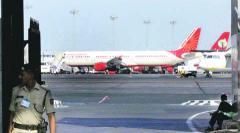
Reliable & Efficient Real Time Weather Data SolutionsFor the first time, pilots in India will be able to gain online access to real-time weather data thanks to the Aviation Weather Observation System (AWOS) that was rolled out at Juhu Airport by IMD Mumbai.

This will now offer pilots a much-needed update to the system of weather warning, as the new system will continuously monitor weather conditions and, using the new air traffic control tower wifi, information on weather conditions will be relayed to pilots via hand-held PC’s.

The system will now give pilots real-time weather data regarding conditions of visibility, wind patterns, temperature, pressure and types of clouds in addition to advance weather warnings through a wireless capability of a range of 50 nautical miles.

The system will come into its own during monsoon season, during which visibility is most commonly affected. “It is a great leap in aviation meteorological forecasting,” said Deputy-Director General of meteorology, IMD Mumbai, K S Hosalikar, and said that the AAI had granted clearance for the installation and for the operation at the required frequency.

The rollout of the greatly enhanced system will be the first time that pilots in the area have had access to such up-to-date information as real-time weather data. It is expected that safety and operational productivity will show considerable improvements.