Archive

Tag Archives: aviation news

The Federal Aviation Administration (FAA) intends to establish an Air Transportation Center of Excellence (COE) for Alternative Jet Fuels and Environment (AJF&E). Joining with leading university members and award matching grants to establish, operate and conduct research on alternative jet fuels and environmental matters. The FAA plan to create a cost sharing partnership between academic, industry, and government focusing on the aviation environmental and issues relating to alternative jet fuels.

After a public meeting held on November 15th and 16th 2012 with the FAA COE Program Office and the Office of Environment and Energy discussed the technical requirements, the COE legislative mandates and the competitive selection process. This Final Solicitation follows incorporating the public comments received.

Type B Messaging Services

Type B Messaging Services

Kazakhstan’s national airline, Air Astana, have renewed and extended its contract for ARINC’s Type B Messaging and AviNet Airport service. ARINC will now provide a complete connectivity and messaging platform for the airline’s airport applications. The first carrier from Russia, Eastern Europe  Kazakhstan’s national airline, Air Astana was recently awarded the prestigious 4-star rating, Skytrax World Airline Awards and named ‘Best Airline in South and Central Asia’.

“As Central Asia’s leading carrier, Air Astana recognises the critical role that connectivity plays in maintaining the very highest standards of operational efficiency and service. ARINC has proved to be an outstandingly reliable and responsive partner in the provision of advanced airline IT solutions over many years and I’m delighted to be renewing and extending the scope of our agreement,” said Chamindra Lenawa, vice president IT and E-business, Air Astana JSC.

ARINC’s market-leading AviNet Messaging is an intuitive solution that uses the internet to provide low cost access to IATA Type B Messaging from anywhere in the world from any computer. Together with ARINC’s extremely resilient network, this meets the air transport industry’s need for high-performance messaging and networking, with the core network operating at 99.999% availability. Integrated with ARINC’s MUSE platform, AviNet Airport provide a fully managed reliable service for Air Astana, the service usually be in operational within 10 working days from the date of order, has an attractive Service Level Agreements (SLAs), pricing, and support.

For more information on ARINCs Type B Messaging Service please visit the ARINC AviNet site.

A330 passenger aircraft ordered

A330 passenger aircraft ordered

Turkish Airlines has signed a firm order for two additional A330-300 passenger aircraft to be deployed on medium and long haul routes from the Turkish Airlines hub in Istanbul. An additional three options as part of the carrier’s continued growth plans, takes their total orders to 38. With the initial order in 1984, Turkish Airlines now operate in total 104 Airbus

Dr Temel Kotil, CEO of Turkish Airlines said “As one of the fastest growing airlines, our strategy of growth needs to be fully supported by efficient, reliable and profitable aircraft” he continued “This new order for A330s reinforces our commitment to a family of aircraft which already helps us to achieve our ambitious expansion plans, in a profitable and sustainable manner”

The A330 is one of the world’s most efficient aircraft with best in class operating economics. With numerous ongoing product improvements, it still remains the most cost-efficient and capable aircraft, averaging dispatch reliability well above 99 percentThe A330 having 250 to 300 seats, includes Freighter, VIP, and Military Transport/Tanker variants, has now attracted more than 1,200 orders, with over 900 aircraft flying with close to 100 operators worldwide.

Airbus Chief Operating Officer, Customers. John Leahy said “We are very proud to win a repeat order from Turkish Airlines as it shows without doubt a strong endorsement for the A330 unique combination of unbeatable economics, versatility and fuel efficiency,”  “In response to the continuing strong demand, we’re making the A330 better and better, with new higher weight variants to offer more payload-range capability while keeping reliability at top level.”

Airbus aircraft share a unique cockpit and operational commonality, allowing airlines to use the same pool of pilots, cabin crews and maintenance engineers, bringing operational flexibility and resulting in significant cost savings.


Brussels Airport Passenger Processing

Brussels Airport Passenger Processing

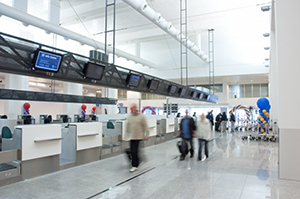
ARINC announced that it has installed the new Passenger Processing System, with on-site maintenance and support at Brussels Airport in Belgium. ARINC installed its CUPPS-compliant vMUSE common use solution on nearly 500 workstations. ARINC’s AviNet global networking solution has also been fitted at the airport providing a secure WAN connectivity to the airlines’ host systems.

CUTE & Telecommunications Service Manager at Brussels Airport, Pierre Gehrenbeck Said “ARINC’s proven history of successfully migrating major airport sites to common-use passenger processing systems was a key factor in our selection decision. In addition, the efficient and cost-effective program is fully scalable to our airport and can be easily adapted to fit our projected growth”.

ARINC’s vMUSE platform maximizes the use of airport infrastructure through shared workstations, reducing the need for complex and expensive hardware systems, and a cost saving and rapid process. Supporting whichever application an airline has, the open design of vMUSE incorporates an easy integration with airline technology requirements.

ARINC have announced the launch of ARINC AviNet® Mail Enterprise Hub (eHub) a New Cloud Based Messaging Service for the Air Transport Community. eHub is a multi-user web-based service that gives the aviation industry a solid messaging environment for all of their communications needs.

Alexis Hickox, Senior Director, Aviation Solutions of ARINC EMEA said “As a hosted solution that is fully managed by ARINC, the entire aviation community now has the benefit of using the industry’s leading messaging service in a secure, reliable and cost-effective manner,” and continued “With its advanced functionality, eHub truly represents the next generation messaging hub for the air transport industry.”

eHub has been designed to be easily configured for either a single user or a global user with multiple divisions and departments with varying messaging requirements. Giving users a single interface that supports the full complement of the aviation industry’s messaging formats and protocols including XML, Type X, Type B, SMTP, X400, Fax and SMS. eHub supports multiple languages. Unlike other comparable systems, eHub performs Type B to SMS message delivery.

It offers simple user message management and includes free internal and local message routing, reducing costs to the customer, building on the System as a Service (SaaS) model.

The Federal Communications Commission is moving to ease restrictions on Internet use in commercial airlines as the agency attempts to enhance competition in the mobile telecommunications market and help speed the deployment of Internet services onboard aircraft. Airlines will be able to test systems that meet FCC standards, establish that they do not interfere with aircraft systems and receive FAA approval.

Rather than having to license on-board systems that provide in-flight wifi on an ad hoc basis, airlines will be able to test systems that meet FCC standards, establish that they do not interfere with aircraft systems and get FAA approval. An FCC statement explained “By reducing administrative burdens on both applicants and the Commission, the new rules should allow the Commission to process ESAA applications up to 50 percent faster, enhancing competition in an important sector of the mobile telecommunications market in the United States and promoting the widespread availability of Internet access to aircraft passengers.

While the FCC is working to speed up deployment of aircraft Wi-Fi systems in airplanes, an airplane manufacturer is also testing on improvements on wireless signals in airplane cabins, making it possible for passengers to enjoy more reliable connectivity when using networked personal electronic devices in the air.

The satellite antenna will carry the signal to and from the aircraft, and mobile technologies such as Wi-Fi will provide communications within the aircraft’s hull. In addition to promoting the economic growth and job-creating impacts of inflight broadband, the action also continues the FCC’s efforts to update and streamline regulatory requirements across the agency.

At this year’s show, the organizers moved things around a bit and now have an expansive hangar for vendors instead of the tents used in previous years. They’ve also moved the food booths and other services closer to show center, making for less walking. However, as the 2013 U.S. Sport Aviation Expo opened in Sebring, Fla., on Thursday, the industry as a whole still isn’t finding healthy sales.

Sport Expo expects about 20,000 attendees at the Sebring show and it continues to be an important venue for some manufacturers who’ve been able to reliably mine sales leads from would-be customers who come to Florida ready to kick the tires one last time before pulling the sales trigger.

John Calla of Adventure Sport Aviation said “We had a buyer come down from Michigan just to see the airplane and make a final decision,” he continued “Some buyers just have to see it, and see it again and see it one more time and then they’ve got to have it,”  The Bristell is a low-wing design that claims the largest cabin size in the field. and the aircraft can accept up to 130 horsepower. That makes it quick, but it doesn’t quite provide the power-to-weight ratio of the reigning hotrod, CubCrafters’ popular Carbon Cub. CubCrafters told AVweb that it’s now rolling a new airplane out of the Yakima, Wash., factory about every four days, the strongest sales since 2008.

Meanwhile, Tecnam’s Tommy Grimes told us the company is going in the opposite direction pricewise with a new offering based on the Echo Lite. It will sell for about $75,000, Grimes said. Like everyone else, Grimes said, Tecnam is still searching for a potential price sweet spot and things a sub-$100,000 LSA is worth trying. As reported in our video, Tecnam was also showing off something some would-be LSA buyers will love: air conditioning in a light sport. The 23-pound FlyCool system fits into the tail section of a P2008 with a minimal weight and balance hit. It chills the cabin by about 20 degrees, a welcome capability for owners flying these airplane in the broiling southern tier states.

UK and Irish airspace will shortly have a seamless data link service as a result of UK NATS and the Irish Aviation Authority (IAA) working together with SITA to deliver Controller Pilot Data Link Communication (CPDLC) services to the British and Irish area control centers.

The SITA service and systems support long haul and short haul versions of CPDLC. Long haul aircraft use a Future Air Navigation Systems (FANS) version already implemented over the Atlantic Ocean. Aircraft with FANS systems will now use the SITA network and gateway to communicate with CPDLC systems in the UK and Ireland domestic centers.

Other providers of CPDLC have also hit the headlines recently, including ARINC who now offer a compliance service for airlines.

The Transportation Security Administration will remove airport body scanners that privacy advocates likened to strip searches after OSI Systems Inc. where unable to provide software to make passenger images less revealing.

TSA will end a $5 million contract with OSI’s Rapiscan unit for the software after Administrator John Pistole concluded the company couldn’t meet a congressional deadline to produce generic passenger images. 76  machines where removed from U.S. airports last year and the remaining 174 Rapiscan machines, are to shortly follow with the company absorbing the cost, said Karen Shelton Waters, the agency’s assistant administrator for acquisitions. The TSA will instead use 60 machines manufactured by L-3 Communications Holdings, the agency’s other supplier of body scanners. “It became clear to TSA they would be unable to meet our timeline,” Waters said. “As a result of that, we terminated the contract for the convenience of the government.”

Airline passengers were offended by the revealing images, including those of children and the elderly. The Washington- based Electronic Privacy Information Center sued the agency in July 2010 claiming the scanners violated privacy laws and has called use of the machines equivalent to a “physically invasive strip search.”

Sanders said the Rapiscan units did their job by screening 130 million passengers, and the agency wouldn’t have acted if not for the congressional mandate for privacy software.”We are not pulling them out because they haven’t been effective, and we are not pulling them out for safety reasons,” Sanders said. “We’re pulling them out because there’s a congressional mandate.”

OSI Systems is “pleased to reach a mutually satisfactory agreement with the TSA” that will involve moving the machines to other government agencies, L-3 scanning machines rely on millimeter-wave technology, which uses radio frequencies that can find both metallic and non-metallic items. Rapiscan’s machines are based on backscatter technology, which uses low-dose X-ray radiation to detect objects under a passenger’s clothes. Under pressure from privacy advocates and some members of Congress, the TSA moved its screens to separate rooms away from airport security checkpoints. Officials monitoring the scanner images alert agents if they see a possible risk.
The agency’s strategy for handling passenger traffic relies on the capability of L-3’s millimeter-wave machines to process passengers in about half the time as Rapiscan machines, Sanders said. TSA will be getting about 60 more L-3 scanners in January and February, he said.TSA is also planning to move some scanners from airports where they’re underutilized to busier airports, Sanders said. The agency plans to expand the PreCheck program, in which passengers share personal data before going to the airport in exchange for less-invasive screening that lets them keep their belts and shoes on.