Archive

Tag Archives: aviation communications

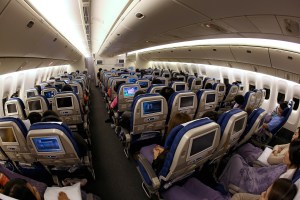
Business Aviation News | Aircraft broadband milestoneIt has been announced that Panasonic Avionics achieved a major milestone in December last year with the connection of broadband services equipment to its 1000th aircraft – a Boeing 777-300.

In-flight aircraft broadband is increasing in demand for both commercial and business aviation passengers, as the latest technological advancements dictate. Panasonic Avionics serves around 3,000 aircraft to date to the global connectivity service, a number which they expect to rise to 15,000 by 2025.

Other providers of aircraft broadband connectivity are also experiencing a surge in demand, and the industry as a whole expects that demand to continue. Next generation cabin connectivity offers mobile support with enhanced bandwidth, benefitting both passengers and cabin crew.

Business aviation providers of passenger communications | Find out more about onboard internetA new communications satellite has been launched by Intelsat this week, the first of its latest EpicNG range. Intelsat 29e has been designed to provide low-cost connectivity for the North American routes for both air and sea and will eventually become part of a seven-strong satellite network.

The satellite will be used to deliver fast passenger communications onboard aircraft, as today’s demands increase for connectivity. Currently, both business and commercial aircraft are able to provide aircraft broadband at increasingly higher speeds and bandwidth, with many employing the Inmarsat satellite network, such as Rockwell Collins’ ARINCDirect, who provide passenger connectivity exclusively for business jets.

Business passengers are probably the most demanding when it comes to aircraft broadband, as they want and need to continue working onboard as effectively as they can in their ground-based office environments.

More about secure network capabilities | Business Aviation NewsAirlines and operators today enjoy the enhanced benefits of network connectivity, reaping rewards such as increased operational efficiency, situational awareness and passenger satisfaction as processing and data transfer continues to streamline passenger processing.

However, there are still concerns in the industry over security measures, with risks increasing in terms of infiltration, or hacking, of critical airport systems infrastructure.

To ensure comprehensive security across an entire infrastructure, these challenges can be addressed with implementation of reliable network services, such as the use of a Wide Area Network (WAN). Rockwell Collins’ ARINC AviNet WAN, for example, gives airlines and operators secure access to a system that has been in operation for more than 50 years, operating seamlessly with airport systems such as the proven vMUSE platform.

vMUSE is a well-known platform, handling applications for back-office, baggage handling, passenger processing and aircraft communications.

Dealing with aviation network security challenges is an important part of airport operations to ensure aircraft and passenger safety across the globe.

Fotografiert mit Canon EOS 10DA protest is ongoing by representatives of 15 non-commercial aviation groups against the FAA plans to privatise much of the U.S.’ air traffic control systems.

Plans by the FAA to set up an agency run outside the government have already been proposed and are expected to be debated in Congress in the first quarter of this year.

Despite claims that privatisation in Canada and Europe has proved successful, the aviation community is airing concerns over fee issues and are pleading with lawmakers to carefully assess the benefits of a new system under ‘foreign’ control.

Passenger communications technology soaring | Business Aviation BlogAs the quality of aircraft passenger communications increases in demand, Air France Industries has announced it will use Rockwell Collins’ PAVES passenger services systems to upgrade four Airbus A330’s for a client.

PAVES is renowned in the industry for its weight reduction and subsequent fuel savings that can amount over a year to millions of dollars. The system can also operate independently, or can integrate with other passenger communications and IFE solutions, and benefits from a cabin crew call system.

Air France Industries designed the installation and teamed up with Rockwell Collins for this cabin services solution.

advance-passenger-informationMalta’s Police Force’s Immigration Unit has completed five projects to enhance border security measures with the help of co-funding from European Border Funds.

The projects include the procurement of additional radios and biometric devices to assist in communications and comparison of passenger data with international no-fly lists. The new technology is designed to halt the passage of illegal residents, with an on-the-spot ability to screen information.

Furthermore, modernisation of the border control system has been focussed upon, with health and safety upgrades made, in addition to an upgrade of equipment.

Finally, Malta has introduced a system for the collection of Advance Passenger Information to strengthen border security. Many countries throughout the world are enhancing border control measures and providers are using the latest technological advancements to introduce stronger systems including eBorders technology.

cabin-services-worldwideThe recent publication of the ‘Airworthiness Approval of Installed Passive Ultra-High Frequency Radio Frequency Identification’ has offered comprehensive guidance for the use and installation of RFID tags on aircraft parts and components. The guide includes information for passive RFID tags only and not those that use communication via satellite, cell phone or wireless tech.

RFID tags are increasing in popularity and usage, in all areas of technology – from retail shopping to airline baggage tagging.

Some humanitarian groups are concerned with the levels of data that can be stored within the tags, but there is little doubt about the increased security the new types of tags can deliver.

aviation_airgrounddata2Arizona-based Associated Air Centre, an aircraft maintenance and modification specialist, has been granted FAA STC for its Boeing VIP business jet, giving the go-ahead for CPDLC installation.

CPDLC is a part of the requirement for FANS compliance, and is being much discussed in the industry in terms of the benefits for flight deck communications around the world, weighed with the additional burden of cost implications.

Regardless, the mandates are forging ahead with plans for completion in 2020 – an extension of the previous 2016 deadline.

Providers of Controller-Pilot Data Link Communications (CPDLC) systems around the globe are hailing CPDLC as the only answer to safety in the skies as burgeoning air traffic numbers continue to rise year-on-year.

Airlines for Europe begin final preparations for 2016 launch | Business Aviation newsAirlines for Europe (A4E) in in the final stages of preparation as the expected launch date of mid-January approaches.

Air France-KLM, easyjet, International Airlines Group (IAG), Lufthansa Group and Ryanair, Europe’s five biggest airline groups, have partnered to campaign about European aviation policies.

The new airline association began their plans in June this year, after more than 2 years of discussions, and have timed their launch date to correspond with a Dutch aviation summit to be held in Amsterdam (20-21st).

A4E aim to focus their intentions in accord, promising to ‘agree a position and be very loud on it’.

More about aviation cybersecurity protection from leading provder | Business Aviation NewsCybersecurity is a hot, and much debated topic. This is not new news, as the integrity of software solutions, hardware and aircraft communications systems, particularly onboard small, private aircraft has been discussed by operators and hackers alike.

The U.S. and European aviation authorities, although in agreement about the need to improve standards, are experiencing a divided opinion about the methods to employ to combat potential attacks to cybersecurity.

Most of the discord seems to stem from the regulatory standards about the size of aircraft, and the scope of regulations to be applied. The U.S. FAA wants to impose standard for large aircraft, and fear that U.S. companies will find it difficult to sell flight management systems in Europe.

European officials from the European Aviation Safety Agency (EASA) believe that all aircraft, regardless of size or operational scope, should be subject to the same cybersecurity regulations.

The FAA has been tasked with the creation of a panel to discuss and propose new regulatory standards by the middle of next year.

Cybersecurity is increasing in importance since the spate of infiltrations last year of digital aviation systems. Aviation cybersecurity solutions providers maintain that reliable security systems can protect vital infrastructure in addition to the provision of physical security. It seems that both are equally important as potential threats continue to increase around the world.