Archive

Tag Archives: airport security

Find Out More About Other Bag Drop Systems ProvidersPassengers flying with Asiana Airlines and Korean Air will now be able to utilise the benefits of a self-service bag drop system launched at South Korea’s Incheon International Airport.

The new technology will enable passengers to scan their boarding passes and attach their own baggage tags, eliminating queueing at traditional check-in desks. Baggage will then pass into the automated system for transfer to the aircraft after weighing, scanning and measuring.

The service, which is the first of its kind to be introduced to South Korea, will help to streamline the passenger processing system, saving time and costs with a reduced need for dedicated check-in desks. Incheon has deployed the system in partnership with SK Telecom, G-antech and Type22. Other global providers of bag drop technology include ARINC with their ExpressDrop solution.

Providers of Electronic Border Security SolutionsThe sixth hearing of the Senate committee this year focused upon the U.S’s borders security technology, perimeters and infrastructure this week.

Chaired by Mr Ron Johnson, testimony was given on the current state of borders security as the committee look forward to the next steps to be taken to increase effectiveness.

Representatives from Homeland Security and the U.S. Customs and Border Protection agencies gave testimony at the hearing where it was noted the ‘DHS could do a better job of collecting data’.

Information was also shared and discussed regarding perimeter fencing of airport environments, and the use of improved technology to increase situational awareness, an area that many committee members feel is seriously lacking.

Physical security measures in airports are the ‘front line.’ These would include perimeter fencing and security surveillance equipment. Other measures that focus upon enhanced technology with biometric solutions are becoming increasingly popular around the world, particularly as passenger demand increases for greater control of their travel arrangements with self-service systems.

United Airlines Offer Air Miles to Hackers in Bug Bounty ProgramUnited Airlines has today launched a unique scheme designed to locate gaps in the security of their online services, apps and websites, inviting hackers to find and report vulnerabilities in exchange for air miles.

Submissions could achieve up to one million air miles as the airline searches for problems such as brute force attacks, timing attacks, cross-site scripting, forgery attempts and the most serious – proof of a vulnerability that could lead to remote code execution.

Exempt from the scheme are onboard systems investigation, with UA promising prosecution of breach of these actual systems. There are also exceptions of entry in the so-called ‘Bug Bounty Program’ more information can be found here.

Business Aviation Safety SummitThe importance of data sharing, analysis, disaster recovery and the human factors involved in business aviation safety standards will be discussed and focussed upon this week as pilots and aviation professionals meet in Fort Lauderdale at the NBAA and Flight Safety Foundation’s Business Aviation Safety Summit.

Amongst the first speakers was G550 pilot, Steve Charbonneau, who announced the initial success of the voluntary aviation safety and information analysis sharing program (ASIAS) with 12 departmental members.

Mr John Cox, from Safety Operating Systems, a Washington aviation consultancy firm, talked about the fire risks of the use of lithium ion batteries onboard an aircraft and the sobering difficulties of extinguishing such a fire.

The two-day event, formerly known as the Corporate Aviation Safety Seminar, is industry recognised as the premier safety forum.

Advance Passenger Information to Assist Global Aviation Security - APIS ProvidersAt the Global Airport Leaders Forum in Dubai last week, the UAE Minister of Economy and Commerce and GCAA Chairman HE Eng. Sultan Al Mansoori predicted that the UAE will have one of the busiest airspaces in the world within the next 15 years.

Commenting on this suspected growth, the Minister said that major technology investments will be required to ‘keep up with the new challenges’.

He also reiterated that the introduction of Advance Passenger Information earlier this year, with operations based in the Abu Dhabi dedicated Centre for API, was a ‘model to maintaining border security’.

The requirement of API is increasing around the globe and is a step in the right direction to track the movement of high-risk travellers and expediting low-risk passengers.

Airport Security & Infrastructure Systems ProvidersIn a recent report released by Frost & Sullivan, it was predicted that global investment in airport security to reach more than $12 billion by 2023.

The aviation security sector achieved $8.22 billion in 2014 according to the report, ‘Global Airport Security Technology Market Assessment’ and estimate that cybersecurity spending will represent the fastest growth.

Airport perimeter security, command, control and integration technology, in addition to access control and surveillance, are predicted to attract the largest investments, as security concerns continue to rise across the world.

Leading Providers of Airport & Facility Infrastructure SecurityAs the growing concerns in the airports industry reaches fever pitch over security, it is this week revealed that there have been instances of ex-airport personnel using their security badges to gain access to secure areas of an airport environment.

Airport staff and contractors are not screened in the same way as passengers and this can lead to breaches in security, which must remain secure and reliably protected, particularly high-security areas such as concourses, ramps and the tarmac.

As these issues increase, airports are looking to the infrastructure security industry to make full use of the latest technology, which does reduce time spent screening and monitoring these secure areas. Using a collaborative approach with software solutions can mean that identity records are monitored in real-time and even anomalous facility access patterns can be recognised quickly.

Access and infrastructure security providers, such as Rockwell Collins’ ARINC AIM solution, can offer enhanced access security across the entire airport environment, while keeping costs manageable and reducing the workload on currently already stretched personnel.

Improving Airport Security with Biometric Solutions ProvidersAlthough the world’s major airports are stepping up security for passengers and employees, a top airport official, speaking at Los Angeles International Airport still thinks that it may not be enough to stop the ‘lone wolf’ slipping through the net.

Mr Patrick Gannon, police chief of LAX, said that 54,000 employees undergo recurring security screening, including criminal background checks, but believes that this may not be enough. He said, “I agree that in any airport throughout the United States and here also, there is never a 100% guarantee that somebody who wanted to do something illegal or wrong couldn’t make that happen.”

Just two of the U.S. airports, Orlando and Miami, require all personnel that have access to secure areas of the airport to pass through metal detectors, with other major airports conducting random checks. Often airport personnel undergo the bare minimum before being hired, such as a criminal background check.

The debate has been raised since the arrest of the Delta baggage handler at the end of last year at Jackson International Airport for gun smuggling alongside a passenger.

Mr Gannon is concerned about the process of screening airport staff and the risk of a single member of staff being overlooked. Miami airport security director, Lauren Stover agrees that ID badges and swipe cards are not enough to guarantee the eradication of the likelihood of contraband or a person with malicious intent getting through security access doors.

The debate continues as airports around the world aim to stamp out the threat of terrorist attack. As employees could be targeted by organisations, regular and constant screening is the only answer and is held back by cost implications on a broad scale.

Leading Providers of Electronic Security Systems for Airports and FacilitiesPensacola International Airport has announced that it will be ramping up security at with a new electronic security system that is expected to cost $533,000.

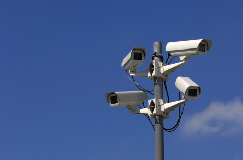
The new high-tech system will include security cameras and a motion detection system with audible warning to alert airport security personnel if concourse areas are breached. The concourses will also be in need of upgrades to facilitate additional security measures for the airport.

It is estimated that an annual $120,000 will be saved by removing the need for constant monitoring of the sensitive areas of the airport.

Contracts have been tendered and discussions will begin this month to decide upon the best way forward with the best airport security systems providers.

Florida’s Department of Transportation will contribute $104,000 towards the technology portion of the project.

API for Border Security in CanadaCanada is forging ahead in a bid to increase the safety of airline passengers, aircraft and crew. Bill C-51, known as Canada’s Anti-terrorism Act, 2015, is to be tackled in two parts:

  • Security of Canada Information Sharing Act
  • Secure Air Travel Act

If passed, the current Passenger Protection Program would be enhanced with greater transparency for the sharing of passenger data in a similar system to that used in the U.S. in the transmission of Advance Passenger Information (API). API transmission before a flight leaves for its destination, can allow government agencies to scan passenger data and achieve early alert when comparison is made to a ‘do-not-fly’ list or similarly, a list containing the names of potential terrorists, members of high-risk political or radical groups – a ‘Persons of Interest’ list.

Opposers of the scheme argue that concerns should be raised when information sharing is discussed. It is by no means decided at this stage the grounds on which a person will be placed upon such lists and the government of Canada propose to lower the threshold and expand the grounds on which a person becomes ‘specified’ under the Passenger Protection Program.

The debate continues.