Archive

Tag Archives: airport operations

Leading Providers of Electronic Security Systems for Airports and FacilitiesPensacola International Airport has announced that it will be ramping up security at with a new electronic security system that is expected to cost $533,000.

The new high-tech system will include security cameras and a motion detection system with audible warning to alert airport security personnel if concourse areas are breached. The concourses will also be in need of upgrades to facilitate additional security measures for the airport.

It is estimated that an annual $120,000 will be saved by removing the need for constant monitoring of the sensitive areas of the airport.

Contracts have been tendered and discussions will begin this month to decide upon the best way forward with the best airport security systems providers.

Florida’s Department of Transportation will contribute $104,000 towards the technology portion of the project.
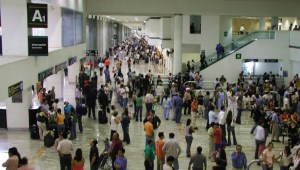
Leading Airport Security Providers - Physical and Infrastructure ProtectionFlight passenger numbers are increasing every year by an average of 5%, which may not sound like much, but we are talking millions of travellers passing through country’s border management systems, placing strain on many an airport infrastructure.

In addition to this growing pressure, airports and border agencies are also faced with the increasing threat of terrorism, which is also growing at an alarming pace, particularly over the last few years.

So what is the answer? Airports all over the world are being left with no other choice than to invest heavily in strengthening security measures across the entire airport environment.

This has led to a surge in growth for the airport security systems sector, which, according to new analysis from Frost and Sullivan estimates that the market will earn revenues in the region of $12-$13million by 2023. The study looked at the areas of perimeter security, surveillance and access control amongst many other aspects including data integration and cyber security as we see the concerns rising with the development and utilisation of connectivity onboard aircraft.

With NextGen technologies also poised to catapult the entire industry into the future, aviation security providers must be ready to go global.

API for Border Security in CanadaCanada is forging ahead in a bid to increase the safety of airline passengers, aircraft and crew. Bill C-51, known as Canada’s Anti-terrorism Act, 2015, is to be tackled in two parts:

  • Security of Canada Information Sharing Act
  • Secure Air Travel Act

If passed, the current Passenger Protection Program would be enhanced with greater transparency for the sharing of passenger data in a similar system to that used in the U.S. in the transmission of Advance Passenger Information (API). API transmission before a flight leaves for its destination, can allow government agencies to scan passenger data and achieve early alert when comparison is made to a ‘do-not-fly’ list or similarly, a list containing the names of potential terrorists, members of high-risk political or radical groups – a ‘Persons of Interest’ list.

Opposers of the scheme argue that concerns should be raised when information sharing is discussed. It is by no means decided at this stage the grounds on which a person will be placed upon such lists and the government of Canada propose to lower the threshold and expand the grounds on which a person becomes ‘specified’ under the Passenger Protection Program.

The debate continues.

Providers of Inflight Messaging with GLOBALink ACARSHong Kong Airlines this week became the launch airline for the latest Rockwell Collins service that offers live credit card authorisation using WiFi over the ARINC ACARS infrastructure.

The first service of its kind in the industry is offered via an agreement with the DFASS Group, retail options providers for Duty Free luxury brands.

The introduction of the service will eliminate losses for HKA due to credit card fraudulent activity and will offer them greater scope for the provision of high value items in addition to immediate seat upgrades with the safe removal of credit card spending limits.

“In-flight credit card sales represent an important revenue stream for our airline,” said Mr. Stanley Kan at HKA.  “However, without the ability to conduct live credit card authorization, we faced the risk of loss due to fraudulent transactions.  Now, by validating transactions in real time, we can significantly decrease our risk.”

“Our Wi-Fi over ACARS solution allows airlines to capitalize on their existing equipment to conduct live credit card authorizations without the need to invest heavily in expensive connectivity equipment,” said Heament John Kurian, managing director, IMS Asia Pacific for Rockwell Collins. “With this cost-effective new service, we can help airline customers around the world increase security by identifying individuals involved with fraudulent credit card activity.”

Baggage Handling Systems - Behind the ScenesLast week the Transportation Security Administration (TSA) offered a rare behind-the-scenes look at the journey luggage takes through the Philadelphia International Airport baggage handling system.

As one of the first airports to implement automated explosive-detection in 2003, following government mandate introduction of explosive-detection screening after the terrorist attacks of 9/11.

TSA spokesman, Michael McCarthy said, “Some people think the TSA opens and physically screens every single bag. That may have been the case immediately following 9/11, but not today.”

The automation of explosive-detection at Philadelphia International baggage handling system can mean that 1,000 bags every hour are screened – via an in-line system of conveyor belts and detection machinery.

The luggage embarks on a 15-minute journey through the airport baggage handling system and travels almost a quarter of a mile, almost never being handled by human hands. If cleared, via sophisticated CT scanning equipment, the luggage makes its way to the aircraft. If an alarm is activated, or if TSA wants a closer look, the bag is removed, opened and physically searched by a TSA officer at an inspection station.

Electronic screening and an automated baggage handling system can improve operational productivity at airports by streamlining a previously complicated, manual system. Not only does the system improve efficiency, but can also reduce physical injuries from lifting heavy baggage and reduce the possibility of damage to passenger baggage or instances of theft.

Leading Global Providers of eAPIS SolutionsCanada’s Border Services Agency is working towards a U.S.-style Electronic Advance Passenger Information System (eAPIS) to protect its borders and is hoping for complete implementation by spring 2016.

A survey has been created by the Canadian Owners and Pilots Association (COPA) to assess how the new requirements will impact Canadian and U.S. pilots crossing the borders in a bid to make the transition as seamless as possible.

“This survey will provide statistical feedback to Canadian and US officials to find a solution that both addresses their goals and minimizes duplication,” said COPA Vice President of Operations Patrick Gilligan. “COPA is heavily involved in finding creative solutions to minimize the detrimental consequences that any additional requirements will have on our sector of aviation.”

The survey, which can be completed anonymously if required, will aim to assess the general ‘feeling’ of pilots conducting cross-border leisure and personal flights – whether they think that the implementation of a system will impact flight operations in a detrimental way.

The survey will also attempt to gain a general consensus about the introduction of a single portal for the transmission of pilot and passenger data to the Canadian Border Services Agency.

The Aircraft Owners and Pilots Association (AOPA) are working with COPA to ensure that the implementation of an eAPIS mandate remains seamless.

“We’re really working to find a way to make this as transparent as possible,” said Tom Zecha, AOPA manager of aviation security. “We encourage AOPA members who cross the border—or even those who don’t but think they might someday—to complete the survey to convey the impact a duplicate system would have on cross-border operations.”

More Information about CPDLC NextGen BenefitsThe FAA’s Bruce DeCleene will be a keynote speaker at the Avionics for NextGen 2015 conference later this year, opening the discussions about the modernisation of the National Airspace System.

The two-day conference, set for October 14 and 15 will open with Mr DeCleene’s discussion about the FAA’s progress with the implementation of major flight technology projects for the benefit of the aviation community as a whole.

Four initiatives are to be targeted over the next two to three years:

  • Datacomm
  • Performance Based Navigation (PBN)
  • Multiple runway operations
  • Surface & data sharing

Also open for discussion at the conference will be the ability of a range of different aircraft types to use existing infrastructure to implement next generation communications initiatives, such as CPDLC, and the ADS-B network in addition to discussions regarding Optimised Profile Descents (OPDs) and the wide area augmentation system.

The challenges associated with the provision of new procedural initiatives and the creation of increased peak throughput at the U.S.’ busiest airports, including re-categorisation of aircraft wake turbulence characteristics will be highlighted at the conference and attendees will hear from pilots and air traffic controllers about the advantages of Controller-Pilot Data Link Comms (CPDLC) and Required Navigation Performance (RNP) in terms of the improvisation of the use of national airspace, fuel cost savings and operational efficiencies.

It is hoped that many questions will be answered at the conference and operators will be assisted with their decision-making regarding the right investments to make for onboard technology to meet the objectives of the NextGen air transportation system.

Biometric eBorders Solutions ProvidersLast week saw a deal signed with French biometric security firm, Morpho (Safran) and the UAE for a range of biometric eBorders technology solutions to be installed in the Emirates’ biggest international airports.

The first installations will take place at Abu Dhabi airport this year, followed by four other airports to create a fully integrated multi-biometric border control system across the UAE.

There will be 96 e-Gates and 94 e-Counters, which will help to expedite passenger processing with the inclusion of touchless fingerprinting, iris and facial recognition systems.

Biometric eBorders technology is a fast-paced industry, embracing enhancements and developing more efficient and effective ways to manage a growing passenger throughput. The need for solutions to manage international borders efficiently, yet maintain security is critical. As threats to national security increase all over the world, the pressure upon governments and border security agencies also intensifies.

Governments and agencies must be able to screen passenger information swiftly and data such as Advance Passenger Information must be transmitted securely. eBorders systems are able to handle critical aviation messaging in addition to the physical screening of passengers in airports.

Biometric eBorders solutions could be the answer to streamlining the entire border management system and must eventually be integrated on a global scale.

Security Solutions Providers for Mission Critical Facilities & AirportsFollowing a recent lecture arranged by the Aviation Security Department of the Murtala Muhammed Airport in Lagos, security personnel compiled a list of new operational equipment that they say is needed to improve security to a level that can help to combat threats to nationwide aviation security.

The equipment list contains state-of-the-art screening facilities including scanners, operational vehicles and communications equipment in addition to a request for the installation of closed circuit television cameras.

Speaking through Mr Wendel Ogunedo, the director of aviation security for the Federal Airports Authority of Nigeria, the aviation security officers have expressed their concern over the trend of inadequacy in the areas of personnel training and obsolete technology in the wake of a growing threat to national security that is not unique to Nigeria.

In order for them to respond adequately, the security officers say that advancements must be made to upgrade their equipment and recruit additional personnel. Mr Ogunedo agreed and said the task of securing the airport from ‘unlawful interference by unauthorised persons’ would be best carried out with the addition of 1500 security personnel.

All across the globe, aviation security is under threat. Airports and other critical facilities can ensure security only with adequate equipment and personnel to undertake what is becoming a major, worldwide concern.

Baggage Handling Systems ProvidersThe Guam International Airport Authority has announced plans to install a state-of-the-art baggage handling system which they hope will be completed by the middle of next year.

Funded by the Department of Homeland Security Transportation Security Administration, the $26million project has been in the planning stages since July last year.

The new baggage handling system is expected to double the handling capacity for GIAA and will incorporate baggage screening capabilities. Using the latest technology allows airports to free up valuable terminal space with multi-airline check in and ticketing and multiple airline bag drop.

Passenger experience is also enhanced with improved baggage handling systems, reducing queuing and allowing passengers to shorten waiting times within the terminal.