Archive

Tag Archives: aircraft industry news

Auckland Airport Fuel Shortages | Airports NewsFollowing an incident earlier this month, when a fuel supply pipeline was severed accidentally by the oil refinery after a digger crashed into the pipe, Auckland Airport has restricted the sales of airline tickets.

Many flights were cancelled after the incident, and fuel uplifts were down to just 30% of their regular fill capacity. It has been reported that 3,000 passengers were affected, after other flights were redirected to other airports for refuelling.

The Marsden Point oil refinery is taking steps to repair the pipeline, but Auckland Airport is taking no chances, and has restricted ticket sales for all but essential flights. The damaged section of pipe connects the Marsden Point refinery to Wiri Oil Services, the Auckland-based company that supplies the airport’s operating airlines with aviation fuel.

The disruption is hoped to be a temporary measure, and additional staff have been employed to address passenger concerns and to assist with rescheduling.

The airport has issued a warning to passengers to check scheduling before arriving at the airport.

Rockwell Collins to be Acquired by UTC | Aviation Industry NewsIt has been announced that United Technologies Corporation (UTC) are to purchase Rockwell Collins in a $30 billion deal including cash and UTC stocks.

UTC Chairman and CEO, Greg Hayes said, ‘This acquisition adds tremendous capabilities to our aerospace businesses and strengthens our complementary offerings of technologically advanced aerospace systems. Together, Rockwell Collins and UTC Aerospace Systems will enhance customer value in a rapidly evolving aerospace industry by making aircraft more intelligent and more connected.

The deal, which has been agreed, but not yet finalised and approved, will deliver greater strategic options for UTC, and will result in the creation of a new business – Collins Aerospace Systems – with Kelly Ortberg in the role of CEO and Dave Gitlin as President and COO.

Mr Hayes continued, ‘We have demonstrated we can successfully integrate large acquisitions into our business and I have full confidence that the team has the capability to do it again.’

The agreed terms will give each Rockwell Collins shareholder a cash sum of $93.33 per share, and $46.67 shares of UTC stock. The final purchase price will take debt issuances into account, and delivers a total equity value of $23 billion. The deal is subject to shareholder and government regulatory approval, and is expected to be completed by the end of 2018.

Rockwell Collins’ current CEO, President and Chairman, Kelly Ortberg said, ‘We are extremely pleased to announce this compelling transaction with UTC which is a testament to the value we have created for Rockwell Collins’ employees, customers and shareowners. The combination will enable us to compete more effectively for future business through continued investments in innovation, world-class integrated product offerings and the ability to retain the top talent in the industry. We look forward to the next chapter in Rockwell Collins’ long and proud history, as part of UTC.’

Airport Systems Integration Solution | Streamlined Airport OperationsThe demands and challenges faced by modern airports today are continually increasing. Passengers require more flexibility, fewer and shorter queues, and a streamlined security experience, while global government departments increase mandatory requirements.

Airport systems integration could provide the answer, as when systems and processes work seamlessly together, airport operators are able to better manage day-to-day operations and resources from a holistic perspective.

Airport management is more than just flight scheduling and passenger processing. Airports are also working businesses with bottom-line budgetary requirements, personnel, retail units and back-office applications. All these processes and systems can be integrated into managed platforms that give the airport operators and owners enhanced control and management capabilities.

Some of the working airport systems that can be integrated include:

  • Passenger processing
  • Self-service kiosks
  • Baggage handling systems
  • Security
  • Maintenance scheduling and management
  • Resource management
  • Car parking
  • Flight scheduling
  • Flight operations and ground handling
  • Retail unit management and revenue
  • Aircraft communications
  • Advance Passenger Information – collection, storage and handling
  • And much more.

Rockwell Collins’ ARINC Airports Managed Services provides comprehensive support via a unique platform, which can also integrate third-party applications and systems. They can work with airports of all sizes to ensure they receive a tailored solution that works for not only their current requirements, but remains scalable for future planning.

As master systems integrators, AMS approaches every project with a clear focus on individual needs and requirements, from both a technical and financial perspective. They can offer solutions that are right for a specific operation, whether their solutions, or those from other vendors.

When an airport has the right balance of solutions, each working with the other seamlessly, then the focus can shift to operational management of the airport, streamlining the passenger experience and making the best use of resources and valuable terminal space.

Watch the video to find out more about Rockwell Collins’ AMS, or visit the website now.

Airport Owners Seek Clarity Over Concerns About Passenger Numbers After Brexit | Airports NewsFive UK owners of Stansted, Heathrow, Gatwick, Manchester and London City airports, have joined forces to put pressure on the Government in the form of a report that suggests that passenger numbers are likely to fall when the country leaves the EU in 2019, if a deal is not in place by then.

The airports commissioned EPI Economics to produce the report, following concerns about the EU treaties that are currently in place that allow British airlines to operate internationally outside the EU.

The report highlights concerns that ‘without the security of guaranteed future access to the single aviation market, the greater the negative economic consequences will be.

This backs up recent warnings from Ryanair, although other airlines have dismissed the likelihood of flights being affected.

Economists have gone further, and have issued a ‘worst-case scenario’ that suggests that the effects could be catastrophic for the aviation industry, with a drop in passenger numbers in 2019 that could total 8 million. A more conservative estimate gives a figure of 2.3 million, but the uncertainty that has surrounded the Brexit issue since the vote was cast has led to confusion and concern across all sectors of the aviation industry.

The report urges the UK Government to prepare to strike a deal with the EU by mid-2018, and suggests that passengers will wait before they make any holiday or travel plans, in case issues arise post-Brexit. As flight schedules are planned and sold up to a year in advance, the report stresses that clarity is necessary to enable airlines to plan too.

Heathrow airport remains confident that the UK Government understands the position of the aviation industry, and the contribution it makes to the country’s economy. Its plans for a third runway are still on the table, and it says that expansion will become more necessary after Brexit.

Tardiest Airline and Airport Announced | UK Airports NewsCivil Aviation Authority data on arriving and departing British and Irish aircraft for the past two years has been examined by the BBC Data Unit, and the results are in.

It has been noticed that during the traditionally busy months of June, July and August in 2015 and 2016, passengers using easyJet and Gatwick airport have experienced the most delays, with an average ‘tardy time’ rate of 24 and 27 minutes late (respectively) for both offenders.

Luton Airport only just escaped the award, at 24-minute average delay time, while British Airways managed to come in third place with 18 minutes.

Which airports and airlines performed best?

Aer Lingus were noted to have given the best performance of all the British and Irish airlines, with an average delay time of 12 minutes, rivalling Ryanair, coming in just three minutes later. Of the UK airlines, Flybe performed most efficiently, with just a 13-minute delay record, and Monarch airlines tied with the Irish Ryanair at 15 minutes.

Among the best performing airports were Leeds Bradford, who tied with the George Best Belfast City airport at just 10 minutes average delay. Birmingham International and Edinburgh did not fare too badly, sharing an average delay time of 18 minutes, but were narrowly beaten by Manchester, Glasgow and Stansted airports with 17 minutes.

French ATC strikes during the summers of 2015 and 2016 did not help easyJet or Gatwick airport’s position, as its location does attract French visitors and tourists moving in both directions.

easyJet released a statement in its defence, saying [of the air strikes], ‘Despite a number of adverse external factors like increasingly congested airspace, particularly in the London area, and record numbers of Air Traffic Control strikes, over the last year easyJet has actually reduced the proportion of flights delayed by more than 3 hours. We work hard to minimise disruption and fully comply with all relevant regulations.

A Gatwick airport representative also spoke to the BBC, and said, ‘Gatwick has made it a priority to address punctuality and, in partnership with our airlines and ground handlers, we are already seeing the benefits of a new wide range of measures that have been implemented to improve punctuality.’

Biometric Airport Technology | Airports NewsSince biometrics were introduced to the US airports market more than a decade ago, the uptake has still been pretty slow in adopting broad biometric measures.

Recently however, the US Customs and Border Protection (CBP) has been making sounds in favour of the introduction of greater levels of biometric technology across the country, particularly facial recognition.

How does facial biometric recognition work?

Facial biometric recognition technology can process information quickly – near real-time – and unobtrusively within the airport environment.

In simple terms, the way the system works places a camera within the airport, typically at passport control or other security area, and compares a live image of the travellers’ face with their travel documentation to determine an exact feature match. Using an automated biometric facial matching identification system, the process can be completed in seconds, speeding up the system of passenger processing significantly.

This increased efficiency is key to improving airport operations, particularly when integration with other airport systems can take place.

The trouble is that in the US, governments and departments cannot decide whether investment into biometric technology, both financial and resources, is for the public or the private sector. However, inroads are being built, as the CBP has announced the intention to use biometrics for foreign nationals leaving the US.

There is little doubt across the aviation industry, particularly within the commercial airlines sector, that biometric technology is the way forward for airport security and borders management. One of the key factors in favour of biometrics, aside from the efficiency factor, is the elimination of potential human error in checking travel documentation.

Travellers, according to the experts, could expect to be using their faces as boarding passes within the next three to five years, once infrastructural and operational challenges and investments can be shaken out within the industry. As passenger experience seems to be high on the agenda for the major players in the industry, biometric technology could be a real possibility.

Lufthansa to Add Five A380s at Munich Airport | Airlines and Airports NewsMunich Airport has welcomed Lufthansa’s decision to base five Airbus A380s at the airport, which it says will boost capacity for long-haul routes and is a ‘future-defining move.’

Dr Michael Kerkloh, CEO at Munich Airport said, ‘This is a big day for Munich’s competitiveness in the aviation industry. This now firmly anchors our status as one of the major hubs in Europe.’ Speaking about the collaborative benefits of working with Lufthansa, he added, ‘We are now reaping the rewards of the very successful partnership of Lufthansa and Munich Airport in the joint operation of Terminal 2 and the new satellite facility.’

The move, which expands on the previous announcement from Lufthansa to station 15 Airbus A350s at the airport, is expected to improve premium services for passengers using the European hub, and will begin during the 2nd quarter of 2018.

belfast-airport-3iIt has been announced this week that 3i, the international investment management company, has taken ownership of Belfast City Airport in a deal that was originally announced at the end of last year.

3i are acting as fund managers for the deal, which is a part of a larger project for the acquisition of assets owned by the EISER Global Infrastructure Fund, including the airport.

Before the deal could go ahead, approval was required from the European Commission under the guidance of terms set out in the EU Merger Regulation. Approval has now been realised, and the deal for the Belfast City Airport finalised.

The identity of the new owners has not yet been made public.

cabin-services-worldwideThe European Aviation Safety Agency (EASA) has released a Notice of Proposed Amendment (NPA) to offer new certification specifications for airport design, in a bid to make operations for large aircraft simpler at existing airports.
The new proposals are centred around the improvements and technological advancements in modern aircraft guidance systems.

EASA aims to increase airport capacity across the region without compromising safety and security aspects, with a particular focus on currently congested airports and aerodromes, and in a bid to reduce operational and infrastructure costs.

EASA also hopes that the proposed amendments to CS will deliver environmental benefits via an increased efficiency of land use and fewer construction materials being used.

The Notice of Proposed Amendment will be open to the public for comment until the end of May 2017.

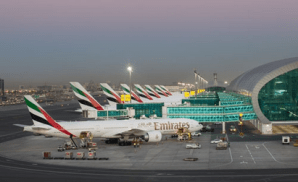
Dubai Airports Introduce World's Fastest WiFi | Business Aviation NewsDubai International Airport (DXB) and Dubai World Central-Al Makhtoum International Airport (DWC) is to make the fastest WiFi speeds in the world available to its passengers – for free.

Using WOW-Fi, DXB and DWC will deliver up to 100mb connection speeds to support its travellers, following last years’ release of unlimited free WiFi across both airports. The aim, according to Michael Ibbitson, executive VP of Technology and Infrastructure for Dubai Airports, who said, ‘As the biggest international airport in the world, we are at the heart of many journeys across the globe. To support these travellers, late last year we launched unlimited free high-speed Wi-Fi across our airports, but our goal was to offer something they have never experienced at an airport before.’

With speeds of up to 100mb, many of the 89 million travellers that pass-through Dubai airports every year, will be able to quickly download emails, images, videos and interact with family and friends on social media, enjoying superfast, reliable and free connectivity.

As a part of the upgrade project, Dubai Airports has also provided required bandwidth via enhanced internet links of 5Gbps each, and is investing in over 6,000 new WiFi access points to ensure reliability and an upgraded wireless network infrastructure over both airports.