Archive

Monthly Archives: July 2014

Passenger Screening at Airports - Solutions ProvidersLast week we saw a call from the U.S. and the U.K. to boost security in airports across the countries as the threat of Islamic radical activities raised its ugly head once more. This week we see France following suit with a boost in passenger screening at its airports. Those most likely affected will be Paris’ Charles de Gaulle and Heathrow in the U.K. receiving a combined average of 2.5 million passengers per day.

The enhanced passenger screening procedure may cause delays for travellers, but the consensus is that it is a greater priority to keep passengers, flight crew and aircraft safe from threat. Both French and British authorities have advised passengers to allow extra time to pass through the enhanced screening procedures.

It is not clear what is involved, but it is thought to be focussed upon footwear and electronic devices, such as mobile phones, tablets and computers. Earlier today, there were reports centred upon the use of mobile phones to carry complex explosive devices. Particular attention was being paid to those phones that are not fully charged, or at least able to be switched on with battery life remaining.

Other Cabin Services ProvidersTo help reduce operational costs, Finland airline, Finnair has announced its decision to outsource cabin services for 20 long and short-haul flights over the next two years. It is not yet clear about the related impact this will have upon current personnel.

This is not breaking news, as Finnair have been finalising cost-saving measures since March, particularly in the area of cabin services. Finnair has had a cost reduction program in place since 2011, aiming to reduce operational expenses by 18 million EUR. The options include personnel reductions including redundancy, temporary lay-off, hours reductions or a combination of all these options. The cabin services outsourcing plan will go ahead and will be trialled in order to determine the best course of action moving forward for the airline. Finnair will also examine the cost implications of setting up a subsidiary to take over the cabin services functions.

Ville Iho, Chief Operating Officer for Finnair made the following statement, “Finnair has once more met with representatives of the Finnish Cabin Crew Union (SLSY) in an effort to find a common cost reduction solution that would make it possible to avoid outsourcing. SLSY offered 2.9 million EUR in permanent, instant savings, as well as 4.8 million EUR savings that would be achieved within a 20-year time period. This is mainly the same as SLSY’s previous offer. In addition, as a new element, SLSY proposed approximately 4 million EUR temporary savings for a period of one year. In exchange, SLSY required two year protection against lay-offs. Unfortunately, this is too far from the savings that Finnair requires. We cannot continue with our current cost structure, which is why we need to make instant, permanent changes to it. We proposed a solution that would see 12 million EUR of the cost reductions implemented immediately and the remaining 6 million EUR over a longer period of time. Even this compromise did not lead to an agreement.

He added that partnership negotiations for outsourcing are proceeding well, with potential partners in Finland, Europe and Asia. No rushed decisions will be made and careful negotiation and planning will be ensured.

Data Link Upgrade InformationAviation maintenance providers, Jet Aviation Dubai announced the completion of its first CPDLC, data link upgrade and ADS-B Out installation on a Gulfstream G550 this week for a regional client.

Data link upgrades to avionics offer improvements to communications between controllers and pilots and can add a level of visibility to long-haul communications.

The director of Safety & Maintenance at Jet Aviation Dubai, Wajahat Ali Khan said, “This particular upgrade was technologically challenged and logistically complicated. I am very pleased to note that our team of qualified technicians worked tirelessly to re-deliver the aircraft on schedule.”

Other leading providers of CPDLC and HF data link communications solutions, such as ARINC, acquired last year by the aeronautics giant, Rockwell Collins, have been delivering data link solutions and upgrades for more than a decade. ARINC were one of the very first providers of data link, pioneering ACARS communications which today has become the industry-standard for aircraft messaging. With global coverage, data link upgrades are increasingly in demand.

Many modern aircraft are now manufactured with HF Data Link capabilities as an option and the airlines specifications for the inclusion of the Data Link upgrade are growing at a rate of almost 20% every year.

Other Real-Time Flight Tracking ProvidersIt has been announced that Skyservice Business Aviation operators have signed a deal that will give real-time flight tracking benefits on a global scale.

The solution, to be installed on Learjet 45’s that make up the Skyservice Air Ambulance fleet, will also offer data collection for maintenance purposes and monitoring functions to enable issue fixing and thus minimising potential downtime and helping to increase operational productivity.

The agreement has been signed initially for five years at an estimated value of $550,000, based on potential flight hours and list prices. Skyservice has signed a contract with Star Navigation Systems Group Ltd, a Canadian-based technology company with a focus on aerospace solutions.

Sam Cimone, President of Skyservice Business Aviation said “Our company is continuously looking at improving its operations and efficiency and more importantly, the safety of our passengers and clients. The STAR-A.D.S. (TM) solution, with the precise data it continuously and globally provides, coupled with its analysis abilities, will enhance our performance, and assist us in monitoring the aircraft in real time. This will ensure better utilization of the aircraft and safety for the passenger”.

As we enter the fourth month following the unprecedented disappearance of Malaysian Airlines flight MH370, more airlines and operators are looking to real-time flight tracking solutions.

Bombardier's Challenger 350 Business JetBombardier’s Challenger 350 business jet received full type certification from the FAA last month, marking a key step in the journey to entry-into-service for the luxury aircraft.

Stéphane Leblanc, Challenger Programs, Bombardier Business Aircraft vice president and general manager said that the aircraft has been “Designed with the feedback from existing Challenger aircraft owners and operators”, adding that the “New aircraft will meet their ever-growing needs. We are looking forward to delivering this segment leading aircraft and are confident that our customers will love it.”

Following certification, NetJets Inc unveiled their new Challenger 350 at the Westchester County Airport, N.Y. with Bombardier Business Aircraft president, Eric Martel presenting the ceremonial keys to NetJets chairman and CEO Jordan Hansell. NetJets will add eight jets to their fleet this year.

“The addition of the Challenger 350 aircraft to our fleet is a significant step in NetJets’ continued growth, and clearly demonstrates our commitment to provide NetJets customers with the most state-of-the-art aircraft models in the industry,” said Hansell. “This is the first of up to 200 Challenger 350 aircraft that we have on order from Bombardier over the next 10 years. We worked very closely with Bombardier to deliver an aircraft that exceeds our customers’ needs by providing the highest levels of safety, comfort and convenience.”

NetJets have made private aviation history with their purchases of $17.6 billion in aircraft since 2010 for their Signature Series. So far they have received 38 jets from various manufacturers.

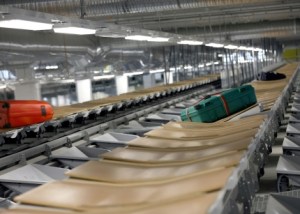
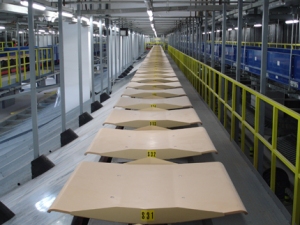
Automated Baggage Handling System - Find Out More...It has been revealed that Guam Airport will receive a new $26million automated baggage handling system that will greatly enhance the experience for passengers travelling through the airport and free up valuable terminal space. The system is looking at a completion date of 2016.

The announcement was made at a presentation on Thursday, attended by officials and key airport stakeholders. Funded by the Department of Homeland Security (DHS) Transportation Security Administration (TSA), the high priority project due to the current use of TSA baggage screening pods were installed and operated within the ticketing lobby, causing delays and congestion. The grant has been secured during a justifiable case for the optimisation of the TSA screening system.

“The Airport is one of Guam’s most critical facilities. It’s the first place our visitors see and it’s the last place we have to leave a lasting impression with them. Safety, reliability and efficiency have got to be our top priorities and I’m proud of the work our Airport family is making,” said Governor Eddie Baza Calvo. “This new system is further proof that our federal partners have faith in our ability to move these projects forward and the credibility to be transparent with critical federal funds. All of the GovGuam family is committed to fixing problems of the past and making sure there is room to grow in the future. This is the kind of progress Guamanians deserve.”

To upgrade and replace the system, it is expected to take approximately 22 months. The new system will speed up operations with the latest automated baggage handling system processing up to 680 per hour, per machine, opposed to an average of 200 bags per hour using the current, outdated model.

HondaJet First Flight CompletedHonda Aircraft were excited to announce that the first production HondaJet made its first flight last week and reported successful checks during the 84-minute flight. In-flight checks included: landing gear operation, flaps and speed brakes, low and high-speed handling and avionics testing of the Garmin G3000 system.

Test pilot Warren Gould reached an altitude of 15,500 feet and 348 ktas and was greeted by more than 1,000 Honda Aircraft employees upon his return.

President and CEO of Honda Aircraft, Michimasa Fujino said, “With this first flight, the HondaJet program has entered the next exciting phase as we prepare for delivery.”

The beautiful new jet, painted in a deep green pearl colour, is the first in a batch of production models that will be available for delivery after FAA certification, which is expected during the first half of 2015. The five-passenger, single pilot jet is capable of a maximum speed of 420 ktas, altitude of 43,000 feet and has a NBAA IFR range of 1,180 nautical miles.

Leading Providers of Airport Baggage Handling SystemsNew research has revealed that commercial airport baggage handling systems market could be worth as much as $37.86billion by 2020. The research, titled ‘Commercial Airport Baggage Handling Systems Market by Sorting Systems’ provides in-depth analysis into the current size of the industry and examines growth prospects during the forecast time period.

There are also highlights of growth stimulation, key global markets and a detailed understanding of the emergence of opportunities concerning new RFID technology for tagging and developments within the workings of the immensely complex sorting systems.

Success with automated baggage handling systems and monitoring technological solutions has been demonstrated by the sharp fall in mishandled baggage rates, lost baggage and passenger processing delays, particularly as passenger flow has done nothing but increase steadily on a global scale.

Modern airport infrastructure relies heavily upon the efficiency of the baggage handling system and automated baggage handling systems increase operational productivity, streamline the entire check-in and passenger processing system and ultimately save money for airlines and airports in the long-term. Integration of automated baggage handling systems with airport IT systems, security systems and airline DCS all adds to the mix to pave the way for the future growth of the market sector.

Business Aviation Conference in BrazilThis years’ EBACE show to be held at São Paulo Congonhas Airport, will be operating under tough conditions as facilities are limited and a large tent at the show entrance will need to be erected. Organising the event has been a catalogue of delays for the Brazilian industry group, Associação Brasileira de Aviação Geral (ABAG) during a period of remodelling for the venue.

“We’re working with the expectation that the fair will be smaller this year than in 2013, which was smaller than in 2012. If it’s bigger, it will be only slightly bigger,” said ABAG executive director, Ricardo Nogueira.

Attendees for the show have declined over the past few years, with 13,823 visitors last year compared to 16,722 attendees in 2012, which at the time, was largely attributed to bad weather during the show’s opening days.

This year it is hoped that figures will rise due to the location of the World Cup tournament, which will bring a boost to local business aviation.

“All our airplanes are chartered for the World Cup, there’s a lot customer aircraft activity, and we’re doing a lot of FBO work for international visitors,” said a spokesman for TAM Aviação Executiva.

There is already a shortage in ramp space available during the tournament with 83% of business aviation slots reserved – equating to approximately 89,640 movements out of 108,000. Slots for 1,000 business aircraft have been reserved for the tournament traffic, which is expected to decrease as teams are eliminated.

The building that has been used during previous shows for LABACE conference sessions and registration has been commandeered as a remote terminal for business aviation during the World Cup tournament. Infraero airport authority Investments in this facility should benefit LABACE when it is finally handed over for use by ABAG.

Find out more about Advance Passenger Information SystemFollowing a two-year trial, plans have now been announced for the formal launch of an Advance Passenger Information System (APIS) by the General Directorate of Residency and Foreign Affairs in Dubai (GDRFA-Dubai). The scheme is pending final approval by the Ministry of the Interior, but should be in place by the end of this year or the beginning of 2015.

APIS helps airlines to process passenger informational data and will be a vital part of the border control system of the UAE and aims to reduce passenger checking times to just 20 seconds and thus streamlining the entire passenger processing system to allow for greater efficiency throughout the airport.

“Big organisations require a progressive and ambitious administrative philosophy. The one that is capable of coping with the challenges and at the same time add to its growth and development. GDRFA-Dubai, which deals with millions of people every month from all the segments, follows the same principle. Our cadres are our true treasures,” said GDRFA-Dubai Director-General, Major-General Mohammed Ahmed Al Marri.

The Advance Passenger Information System is ready to be implemented at national level, once approved. Major-General Obaid Muhair bin Suroor, Deputy Director-General of GDRFA-Dubai, has revealed that the first phase of implementation will begin with Emirates Airlines, with their First and Business class passengers. All other airlines and economy class passengers will benefit from APIS during subsequent phases of implementation.