Archive

Tag Archives: flight support services

????????????????????????????????????Tony Tyler, current Director General of the International Air Transport Association (IATA) marked the 70th annual general meeting with details of the first commercial flight anniversary this year of 100 years. On Jan 1st, 1914, said Tyler, the first paid flight took place between Tampa Bay and St. Petersburg and lasted 23 minutes.

Modern aviation sees the industry handling 3.3 billion passengers a day, and carrying more than 52 tons of cargo across 50,000 routes within 100,000 flights.

“Today, aviation is the life blood of the global economy. The industry supports over 58 million jobs and $2.4 trillion in annual economic activity,” said Mr Tyler. “Flying brings people together—families, friends and business colleagues. It gives people the freedom to be almost anywhere in just 24 hours. It has turned our wonderfully big planet into a wonderfully small world of enormous and wonderful opportunities.”

He went on to address the challenges that the industry also faces, mentioning the unprecedented loss of the Malaysia Airlines flight MH370 and reiterating the urgent need to improve global tracking capability to ensure that such an incident never happens again.

Mr Tyler also talked about aviation security as a challenge within the industry and across all sectors.

“Airlines help fund global aviation security with taxes and fees costing $8.55 billion a year. Not all of this is even spent on aviation security. And passengers still say that security remains their biggest travel hassle,” he said. “Inconsistencies across jurisdictions defy understanding. The focus on prohibited objects sees law-abiding passengers treated with criminal suspicion. There is waste and inefficiency. We must do a better job.”

IATA are working with the Airports Council International (ACI) to help implement change and to improve effectiveness and efficiency with Smart Security and the use of the latest technology to streamline operations in order to improve passenger experience without compromising security.

As we look at the aviation industry a century after the first commercial flight, we see incredible advancements on a global scale. Mr Tyler said, “Aviation’s greatest contribution is the freedom it gives people to follow their dreams and change their lives. In 100 years we have turned our enormous planet into a small world. In doing so, we have created a very big future for us all.”

Advanced Information Management Systems ProvidersAviation access management solutions are essential to maintain seamless access control within airports and secure facilities and the marketplace welcomes the latest expansion from Global Elite Group (GEG) this week. Secure Swipe is a portable hand-held unit that utilises a bar code, magnetic strip and RFID reader.

 “Aviation management requires a critical eye to identify where vulnerabilities are, that must be addressed. Having a unit which tracks and records where workers go will accomplish this goal,” said William McGuire, president & CEO of GEG.

The system, specifically designed for the aviation industry, adds a level of mobile security to a platform that improves basic entry security, including outside entry points with documented activity and serves as a guard tour to record an operator’s location.

Comprehensive aviation security is critical on many levels and access management solutions bring a layer of reliability to monitoring the in and outflow of airport staff. Access management solutions providers can enhance overall operational productivity and help to manage costs within the airport infrastructure.

Business Aviation Services ProvidersCurrent customers of BaseOps International will be able to look forward to utilising a new flight planning portal from June 2014. The company announced the forthcoming launch at the Geneva EBACE this week.

The web-based system will enable customers to plan routes and file the flight plans in addition to access NOTAMs and weather information, pre-order fuel and arrange aircraft handling, catering, hotels and even rental cars.

Web-based flight planning tools and services can assist military and business aircraft operators, providing secure and flexible solutions that are easily accessible from portable devices.

Other flight support services and flight planning tools providers, such as ARINC Direct for business aviation, bring packages that can be tailored to each individual customer, whether for a fleet of executive jets or for a single private aircraft.

Business Aviation ServicesA couple of former Embraer executives have formed a new leasing business in Dubai to provide simple and straightforward executive jet aircraft leasing to business aviation. The company was launched at EBACE last week.

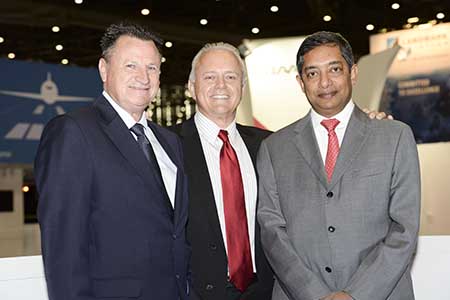
The new company, Veling Tayara is a part of the airline leasing company, Veling, based in Mauritius and headed by Nirvan Veerasamy, former chief of Air Mauritius.

Ernie Edwards and Colin Steven, both former executives of Embraer Executive Jets are setting out to bring new types of leasing structures with simplified financing that will offer far more flexibility, allowing clients to upgrade or change the agreement as their businesses change.

Mr Edwards said, “Our structured finance model provides more than just an operating lease package for a client’s business jet. Instead of tying up an owner’s cash, an operating lease will permit the owner to invest in appreciating assets instead of depreciating capital equipment.”

“Together, my board and I believe there is a service we can provide the business jet financing world that places the client in the enviable position of not having to worry about aircraft disposal at the end of the lease. At that time, the operator can have the simple choice of either extending the lease or returning the aircraft. It’s as simple as that.”

“Veling Tayara will remove the burden of owning the asset and provide inherent options throughout the lease period. It will provide flexible operating leases designed to clients’ individual needs, permitting upgrades to larger, newer aircraft as the business grows,” said Mr Steven.

Flight Deck Weather DataThe recording and delivery of reliable aviation weather data is a critical component in maintaining safety in the skies. Adverse weather is one of the major contributors to aviation accidents on a global scale. But where does the data come from?

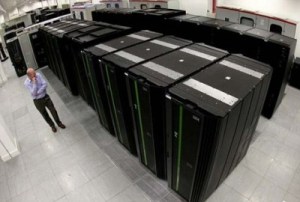
All over the world, weather stations are continuously monitoring and recording weather data consisting of temperatures to cloud cover and everything in between. These stations are called Automated Surface Observing Systems. Supercomputers take this data and use equations and calculations to enable weather forecasting.

The aviation weather data readings must be accurate and as fresh as possible to facilitate swift decision-making, flight planning and scheduling. The FAA issues coded messaging to airports, air traffic services and other authorities with numbered data to ascertain the source of the aviation weather data. Currently, there are 5,431 stations recognised by the FAA.

Timely delivery of aviation weather data is managed by ATS via airline data link, radio communications and often via satellite. Using ACARS, HFDL and CPDLC communications, aviation weather data keeps the safety of all aircraft as a priority. State-of-the-art technology in aviation today can mean that via type b messaging capability, aviation weather data can be accessed and delivered within a second.

Measures to Upgrade Airport Communications SystemsAn investigation into the November shooting at Los Angeles International Airport (LAX) that resulted in the death of airport security officer Gerardo Hernandez and the injury of three others, has highlighted airport communications issues and the need for enhancement in this and other physical security areas.

It is important that lessons learned from the tragic incident are used to review and improve security operations and make changes to bolster safety at not only LAX, but at airports across the country. Subcommittee chairman Rep. Richard Hudson, R-N.C. said that ‘communications breakdowns are not unique to LAX.’

The panel was told that co-ordination among ‘all relevant agencies’ and technical issues prevented the agencies from communicating directly with one another, taking more than 45 minutes before a cohesive plan could be put into action.

The incident is likely to put pressure upon authorities to implement technology to enhance airport communications and the interoperability of communications to ensure such an incident does not recur. Across the world, airport security issues are being raised, from passenger processing to physical security and perimeter fencing.

With technological advancements, information sharing and communications systems, there is a realisation that the solutions are available, yet action needs to be taken and investments made to ensure utmost security is held paramount in airports across the globe.

Solutions for Advanced Passenger Information SystemFollowing the disappearance of flight MH370, the focus of the Annual General Meeting of IATA this key will be enhancing security and finding ways to prevent the recurrence of such an incident.

Tony Tyler, Director-General and CEO of IATA stressed that speculation on the aircraft cannot be a guide to move forward, he said, ‘We need to base our efforts on evidence and conclusions that will come out of investigation. When an incident or accident occurs, our thoughts go to the families and friends of all those on board, and we rededicate our efforts to make this industry even safer.’

Mr Tyler added that the air transport industry is safe, with a low accident-flight ratio, but the ‘world cannot afford to leave the unprecedented missing of such a large aircraft as an aviation mystery’.

Among the issues to be addressed will be the length of time it is taking to locate the missing aircraft and to ensure that adequate flight tracking can be put into place. The issue of airport security and passenger screening has also been highlighted by the fact that two passengers were able to board with stolen passports.

The AGM, scheduled for early June, will focus upon improvements to passenger safety and will discuss the urgency of countries to provide advanced passenger information.

224332-flareScientists have warned that a recurrence of the solar flare that appeared last week could cause further radio blackouts over the coming days to aviation and communications systems. The solar flare was captured on video by the NASA Solar Dynamics Observatory on Saturday.

The intense bursts of radiation that solar flares emit, although not causing damage to the Earth, can affect communications as they disturb the layer of the atmosphere that carry signals.

“Though people on the ground will not be affected, satellite systems may be affected and this would likely have an effect on the aviation and communication systems for a while. This may last for up to a few hours,” said Dr Mayank Vahia, cosmic rays scientist at the Tata Institute of Fundamental Research.

As the Sun is at is peak of an 11-year cycle, it had been warned by the Indian Centre for Space Physics that there could be ‘dire consequences’ to the satellite systems around the planet, depending upon where they are positioned at the time of the activity.

Suhas Naik-Satam, programme co-ordinator (scientific) at the Nehru Planetarium in Mumbai, said, “The effect on the satellite system cannot be ruled out and therefore all sectors heavily dependent on such communications systems will have to stay alert.”

Global Flight Support Services ProvidersThe entire aviation industry have scratched its proverbial head in the mysterious disappearance of flight MH370. It has led to a call from the International Telecommunications Union (ITU) for improvements to the 50-year old ‘black box’ system, using advancements in technology to produce a real-time flight tracking system.

According to ITU, there ‘should be a mechanism to ensure that aircraft can be tracked in real time using state-of-the-art cloud computing’.

The black box recorder is mandatory on all flights, to record vital aircraft data regarding flight operations, aircraft systems, performance parameters, magnetic heading, positioning and other critical information. It is today being argued that this information should be available in real-time, with no possibility of being manually disconnected or the need for the recorder to be physically located in the event of an incident.

There is little doubt that the strength of feeling is running high at this stage. The industry as a whole is being urged to find solutions for flight tracking that cannot be manipulated.

Air Traffic ManagementAirports Fiji Limited (AFL) has awarded a long-term support contract which will look after the Aurora ATM System, commissioned in May 2010 to Adacel, a developer of Air Traffic Management systems with Headquarters in USA, Canada and Australia and clients all over the world.

The Aurora system gives AFL the flexibility to handle traffic growth, bringing high levels of safety and service to operators. Capabilities include automated conflict detection, control by exception and monitoring, 4D profile protection and dynamic airspace allocation. The use of CPDLC, Air Traffic Service Inter-Facility Data Communications and surveillance incorporating radar has brought AFL to the forefront of ATM technology in the Pacific region.

Mr Faiz Khan, Executive Chairman of AFL said, ‘The introduction of the Aurora system in our airspace allowed us to operate with neighbouring ANSP’s in a completely seamless manner using an already developed and proven system. The performance of our system since commissioning has been exemplary and support from Adacel will assure continuing success in the future.’