Archive

Tag Archives: Business Jet

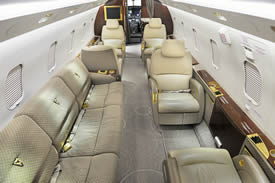
One of Europe’s largest business jet charter operators London Executive Aviation (LEA), based at London Luton Airport, is continuing with expansion by adding another Bombardier Challenger 300 to its fleet.
London Executive Aviation (LEA)

London Executive Aviation (LEA)

“The addition of this Bombardier Challenger 300 to our fleet highlights our dedication to offering the broadest range of aircraft options for business charter operations. We have now amassed considerable experience of operating this type and have been very pleased with its dispatch reliability. The aircraft fully meets passenger expectations for cabin comfort and space, and we have received consistently positive customer feedback” said LEA’s managing director George Galanopoulos. He continued, “Our Challenger 300s fill a niche in our fleet between the midsize Citation Excel and large cabin Embraer Legacys. Their impressive range, coupled with their modern, spacious cabins, makes these aircraft an extremely popular choice.”

The super midsize Challenger 300 has a 3,600 mile range and can operate from runways as short as 1,300 metres. Capable of making non-stop flights from London to destinations such as Moscow, Jeddah, Lagos and Dubai, it can seat up to ten passengers as well as the crew and a stewardess. It is a technologically advanced, high-performance business jet with intercontinental range. It features ‘fly by wire’ avionics, highly efficient Honeywell HTF7000 engines and a state-of-the-art cabin entertainment system.

The Federal Communications Commission is moving to ease restrictions on Internet use in commercial airlines as the agency attempts to enhance competition in the mobile telecommunications market and help speed the deployment of Internet services onboard aircraft. Airlines will be able to test systems that meet FCC standards, establish that they do not interfere with aircraft systems and receive FAA approval.

Rather than having to license on-board systems that provide in-flight wifi on an ad hoc basis, airlines will be able to test systems that meet FCC standards, establish that they do not interfere with aircraft systems and get FAA approval. An FCC statement explained “By reducing administrative burdens on both applicants and the Commission, the new rules should allow the Commission to process ESAA applications up to 50 percent faster, enhancing competition in an important sector of the mobile telecommunications market in the United States and promoting the widespread availability of Internet access to aircraft passengers.

While the FCC is working to speed up deployment of aircraft Wi-Fi systems in airplanes, an airplane manufacturer is also testing on improvements on wireless signals in airplane cabins, making it possible for passengers to enjoy more reliable connectivity when using networked personal electronic devices in the air.

The satellite antenna will carry the signal to and from the aircraft, and mobile technologies such as Wi-Fi will provide communications within the aircraft’s hull. In addition to promoting the economic growth and job-creating impacts of inflight broadband, the action also continues the FCC’s efforts to update and streamline regulatory requirements across the agency.

At this year’s show, the organizers moved things around a bit and now have an expansive hangar for vendors instead of the tents used in previous years. They’ve also moved the food booths and other services closer to show center, making for less walking. However, as the 2013 U.S. Sport Aviation Expo opened in Sebring, Fla., on Thursday, the industry as a whole still isn’t finding healthy sales.

Sport Expo expects about 20,000 attendees at the Sebring show and it continues to be an important venue for some manufacturers who’ve been able to reliably mine sales leads from would-be customers who come to Florida ready to kick the tires one last time before pulling the sales trigger.

John Calla of Adventure Sport Aviation said “We had a buyer come down from Michigan just to see the airplane and make a final decision,” he continued “Some buyers just have to see it, and see it again and see it one more time and then they’ve got to have it,”  The Bristell is a low-wing design that claims the largest cabin size in the field. and the aircraft can accept up to 130 horsepower. That makes it quick, but it doesn’t quite provide the power-to-weight ratio of the reigning hotrod, CubCrafters’ popular Carbon Cub. CubCrafters told AVweb that it’s now rolling a new airplane out of the Yakima, Wash., factory about every four days, the strongest sales since 2008.

Meanwhile, Tecnam’s Tommy Grimes told us the company is going in the opposite direction pricewise with a new offering based on the Echo Lite. It will sell for about $75,000, Grimes said. Like everyone else, Grimes said, Tecnam is still searching for a potential price sweet spot and things a sub-$100,000 LSA is worth trying. As reported in our video, Tecnam was also showing off something some would-be LSA buyers will love: air conditioning in a light sport. The 23-pound FlyCool system fits into the tail section of a P2008 with a minimal weight and balance hit. It chills the cabin by about 20 degrees, a welcome capability for owners flying these airplane in the broiling southern tier states.

It is feared that almost all Indian carriers are in the red, serving one of the world’s fastest growing economies and registered unprecedented growth in traffic. Indian aviation is the ninth largest market in the world and significantly contributed to business, trade and tourism growth in the past decade.

The transportation sector has been impacted by several factors including high operating costs fuelled by high oil and tax cost, cash crunch and soaring debts. Being one of the most important growth in any economy, and air travel has become a necessity and no longer a luxury.

The saving of sales tax on import of ATF is an attractive proposition for airlines. However, they have to use the existing infrastructure of the oil marketing companies (OMC). As India is an ATF-surplus country, direct import by airlines would necessitate finding new export markets for the OMC’s surplus stock. The sector looks toward the Government for tax rationalisation, which most of them believe would be enough for them to soar again, and fuel the growth of the world’s most promising economy.

“ATF pricing mechanism is based on import parity with a black box which currently includes irrational elements and tax on taxes. If a person travels by road or rail, he is using highly subsidised infrastructure or subsidised electricity/ diesel, thereby making a much larger hole in the exchequer. We are only requesting rationalisation of taxes,” says G.P. Gupta, Chief Administrative Officer, SpiceJet.

Passenger Service Fee and User Development Fee, collected on behalf of the Airports Authority of India, suffer service tax thereby pushing up ticket cost, which has outpaced the spending power of customers. According to Gupta, “A major portion of aviation losses is attributable to high taxation.” It is not just the tax, but also the tax on tax which becomes excruciating! For example, several airport operators charge fuel throughput fees from the OMCs. This throughput charge plus service tax forms part of the ATF cost on which sales tax is charged by OMCs, leading to a cascading tax effect.

Passenger Service Fee and User Development Fee, collected on behalf of the Airports Authority of India, suffer service tax thereby pushing up ticket cost, which has outpaced the spending power of customers.

The Transportation Security Administration will remove airport body scanners that privacy advocates likened to strip searches after OSI Systems Inc. where unable to provide software to make passenger images less revealing.

TSA will end a $5 million contract with OSI’s Rapiscan unit for the software after Administrator John Pistole concluded the company couldn’t meet a congressional deadline to produce generic passenger images. 76  machines where removed from U.S. airports last year and the remaining 174 Rapiscan machines, are to shortly follow with the company absorbing the cost, said Karen Shelton Waters, the agency’s assistant administrator for acquisitions. The TSA will instead use 60 machines manufactured by L-3 Communications Holdings, the agency’s other supplier of body scanners. “It became clear to TSA they would be unable to meet our timeline,” Waters said. “As a result of that, we terminated the contract for the convenience of the government.”

Airline passengers were offended by the revealing images, including those of children and the elderly. The Washington- based Electronic Privacy Information Center sued the agency in July 2010 claiming the scanners violated privacy laws and has called use of the machines equivalent to a “physically invasive strip search.”

Sanders said the Rapiscan units did their job by screening 130 million passengers, and the agency wouldn’t have acted if not for the congressional mandate for privacy software.”We are not pulling them out because they haven’t been effective, and we are not pulling them out for safety reasons,” Sanders said. “We’re pulling them out because there’s a congressional mandate.”

OSI Systems is “pleased to reach a mutually satisfactory agreement with the TSA” that will involve moving the machines to other government agencies, L-3 scanning machines rely on millimeter-wave technology, which uses radio frequencies that can find both metallic and non-metallic items. Rapiscan’s machines are based on backscatter technology, which uses low-dose X-ray radiation to detect objects under a passenger’s clothes. Under pressure from privacy advocates and some members of Congress, the TSA moved its screens to separate rooms away from airport security checkpoints. Officials monitoring the scanner images alert agents if they see a possible risk.
The agency’s strategy for handling passenger traffic relies on the capability of L-3’s millimeter-wave machines to process passengers in about half the time as Rapiscan machines, Sanders said. TSA will be getting about 60 more L-3 scanners in January and February, he said.TSA is also planning to move some scanners from airports where they’re underutilized to busier airports, Sanders said. The agency plans to expand the PreCheck program, in which passengers share personal data before going to the airport in exchange for less-invasive screening that lets them keep their belts and shoes on.

Forecasts released for Zpryme Airline illustrate that the air traffic management systems (ATM) market is expected to grow from $5.9 billion in 2012 to $8.1 billion by 2020. In addition, the International Air Transport Association’s (IATA) latest industry traffic forecast shows that airlines expect to fly 3.6 billion passengers in 2016 approximately 800 million more than the 2.8 billion passengers carried by airlines in 2011.

With substantial air traffic expansion and aggressive ATM overhauls in developing countries Latin America and Middle East as well as the majority of airlines are aiming to continue to reduce costs.

Like high growth markets such as United States and United Kingdom that lead in international travel, Canada, which has implemented and developed next generation ATM technology since 1996, has seen improvements in employee and air traffic efficiencies. It has increased Canadian air space capacity to easily allow for increased air traffic. Canada is a solid example of the positive impacts ATM has.

This week it was reported that non-profit initiative “Care by Air” is promoting the concept that empty business aviation flights could be used for humanitarian endeavours.

Care by Air says that 80% of the UN humanitarian aid budget goes to the cost of logistics. Given that, there is an opportunity for the aviation industry to give back to society simply by offering unused capacity at cost price for humanitarian causes.

Care by Air says that flights worldwide are 34% empty – equal to 1.5 million tonnes of empty cargo space. The business aviation community are asked if they could use some of this empty capacity for humanitarian causes at cost price. Just a.0003% take up could provide food  for 5 million people

“MEBA is the perfect platform to interact with business aviation companies and promote humanitarian efforts – to expose just how much we can work together not just in terms of cargo space, but by providing fuel, haulage, warehousing and other costs,” says Care by Air.

The Al Maktoum International Airport is hosting the much acclaimed MEBA event, where ARINC Direct will be exhibiting this month.

ARINC Direct will be showcasing its ConnectOnboard Communications System at MEBA. This latest product in a host of flight support services for business aviation delivers complete ACARS messaging, utilizing an iPad application as the user interface, high quality voice using an iPhone or Android device, and managed email.

“This is fertile ground for ARINC and we are delighted to be expanding our portfolio of services and resources in readiness for the growth,” said James Hardie. ”Our ability to support the widest cross-section of customers with continually evolving products and innovations is an advantage that is the envy of our competitors.”

For more details on the passenger communications, flight support or flight deck communications services offered by ARINC Direct please visit the ARINC Direct Business Flight Planning site.

The government denies that the IPS is a faulty instrument for measuring its progress on migration for the UK. Yet there does not seem to be an accurate system for counting people in and out of the country and government has promised to reduce net migration (the difference between those entering and leaving the country) to “tens of thousands” by 2015.

Border Management

The e-borders scheme meant to do this activity, and is still a work in progress. Despite government assurances, according to experts when it comes to measuring how many people are leaving the country is unclear and the increasingly rigid process it is to get a visa for the UK, it seems there is no way of knowing if someone is still in the country when it expires. E-borders replaced the old paper-based embarkation system, scrapped in the 1990s.

IPS emigration estimates are based on interviews with just 2,000 people and there is currently no alternative source of data to measure them against. Instead the government relies on the answers given by a sample of travellers who agree to be stopped and questioned by a team of social survey interviewers at Heathrow and other main air, sea and rail points of entry to the UK.

E-borders which was primarily meant to improve security, when combined with a biometric identity card scheme, began collecting details of passenger and crews for inbound flights from outside the EU at nine airports in March. The plan now is to extend it to ports and railway stations by 2014 and to passengers from within the EU by 2015. But that will depend on persuading all EU countries to share passenger and crew list information – quite a number of them regard this as illegal under European free movement laws.

Electronic border schemes can be adopted by both airlines and airports. One product by ARINC, Electronic Borders, is designed to adapt to the changes in operational process and support new technology, enabling Border Control agencies to flex with changing demands and capabilities.

Today it is not enough to simply secure borders from unauthorised entry by known undesirables. Now it is necessary to manage the stay of travellers, from entry through to exit, to know who has been in the country and when they left.

The ARINC Border Management System delivers a full stay management capability, screening all travellers before they travel, and managing visitors throughout their stay. For more information please visit the ARINC Electronic Borders website.