Archive

Tag Archives: business aviation

Providers of Aircraft Tracking Services for Business AviationThe European Space Agency (ESA) have outlined the Iris program this week in a collaboration with the Single European Sky ATM Research Joint Undertaking (SESAR JU) program, with a view to increasing the efficiency of global aircraft tracking through a satellite-based communications system.

Making improvements to future Air Traffic Management techniques is a key part of the initiative and Iris will potentially leverage a satellite-based system with current VHF ground-based communications systems that may bear the weight of overcrowded airwaves in the near future. It is planned that data link channels and ATM operations will become accessible and give new opportunities for aircraft tracking in a four-dimensional capacity – latitude, longitude, altitude and time. The system is known as 4-D trajectory management and it is hoped that it will be fully accessible by 2018.

In spite of various delays with upgrades to aircraft, the Iris program is designed to dramatically improve communications and bring the increased efficiency to operational productivity that has been sought by airlines, ATM and operators for more than 20 years.

Aircraft tracking via satellite communications will work in real time and use aircraft positioning reports, in addition to the complement of voice communications. Both continental and oceanic airspaces will be reliably covered to give truly global, uninterrupted coverage.

Business aviation enjoys the reliability of real-time aircraft tracking with providers delivering a satellite communications service over a robust system architecture, such as the Rockwell Collins’ ARINCDirect service, which provides seamless coverage via Inmarsat SwiftBroadband and Swift64 in conjunction with Iridium satellite communications. Real-time flight tracking is a sought-after service that is growing in demand, particularly since the disappearance of flight MH370 earlier this year.

As air traffic grows, demand upon the airways increases and the latest technological developments are needed to ensure utmost safety and reliability for all aircraft, both commercial and private.

Providers of Passenger Communications for Business AircraftHoneywell’s JetWave SATCOM systems will be fitted by GDC Technics in an agreement signed in Dubai last weekend for in-service Boeing and Airbus business and commercial aircraft. The system, JetWave, will be available during 2015 and supports the Inmarsat JetConnex (JX) WiFi service, promising to deliver consistent, high-speed inflight connectivity for business aircraft all over the globe.

GDC, Texan-based provider, will develop the STCs for the aircraft, including the Boeing range of business jets and Airbus corporate jets, which will enable the retrofit process to commence. The STCs will also be marketed to other completion centres and will encompass the following aircraft:

  • Airbus A319
  • Airbus A330
  • Airbus A340
  • Boeing 737
  • Boeing 747
  • Boeing 777
  • Boeing 787

Mike Beazley, vice-president of Aftermarket Sales for Business & General Aviation at Honeywell said, “Through this agreement with GDC Technics, Boeing and Airbus operators will soon be able to easily upgrade their aircraft with one of the most advanced and capable in-flight connectivity systems on the market. JetConnex will bring high speed, consistent global in-flight internet connectivity via WiFi to the cockpit and cabin and we expect to see significant demand for the technology, particularly for long haul commercial and business planes flying out of the Middle East.”

The partnership agreement the system will be focussed upon the Ka- and Ku-band, bringing greater bandwidth with Inmarsat SwiftBroadband for flight deck communications requirements.

Mohammed Alzeer, general partner of GDC Technics said, “High speed, consistent in-flight WiFi over land and sea is a technology game-changer for the industry. Through this agreement with Honeywell, bizliners and commercial air transport aircraft around the world will soon be able to access Inmarsat’s JX service.” Continuing, he echoed a sentiment that is widespread in the aviation industry, particularly in the business jet sector, “In today’s always-on society the ability to stay connected while in the air is fast becoming an expectation rather than a nice-to-have, making the JetWave hardware from Honeywell and JX service from Inmarsat an important differentiator for operators.”

Expectation is increasing noticeably in the business jet industry, as more and more executive travellers need the benefits of an ‘office-in-the-sky’ environment.

Business Aviation News for EU VAT ReliefThis week terms were clarified for the temporary admission of foreign business aircraft into the EU by a published paper, confirming that conditional VAT relief will be granted.

The move followed requests from the International Business Aviation Council (IBAC), as many business aircraft operators were uncertain and needed clarification.

IBAC director general, Kurt Edwards, welcomed the paper and said, “This paper issued by the European Commission clearly resolves the confusion. As long as the operator meets the conditions for temporary admission, it can use the process to receive conditional relief from the Value-Added-Tax and Customs Duties obligations and operate to, from and within the EU.”

When a foreign-registered aircraft flies from a non-EU country and conducts flights within the EU, it can be eligible for temporary admission and therefore can claim conditional relief from taxes and duties. Foreign-registered aircraft are still subject to VAT and duty when they are permanently imported.

The latest guidelines from the EU clearly explain the previous confusion and remind operators that these conditions apply only to aircraft that are being flown for private use and do not include commercial carriers.

New Releases from GulfstreamThe latest Gulfstream family of business executive aircraft promise to deliver faster speeds in addition to larger cabins and an increased range.

Unveiled earlier this year, the Gulfstream G500 and G600 look set to deliver the greatest capabilities yet and straight into the hands of the consumer with a growing need for speed over long distances. Business jets with longer range capabilities are in demand more and more as executive travellers expand their business circles in the hunt for the contracts.

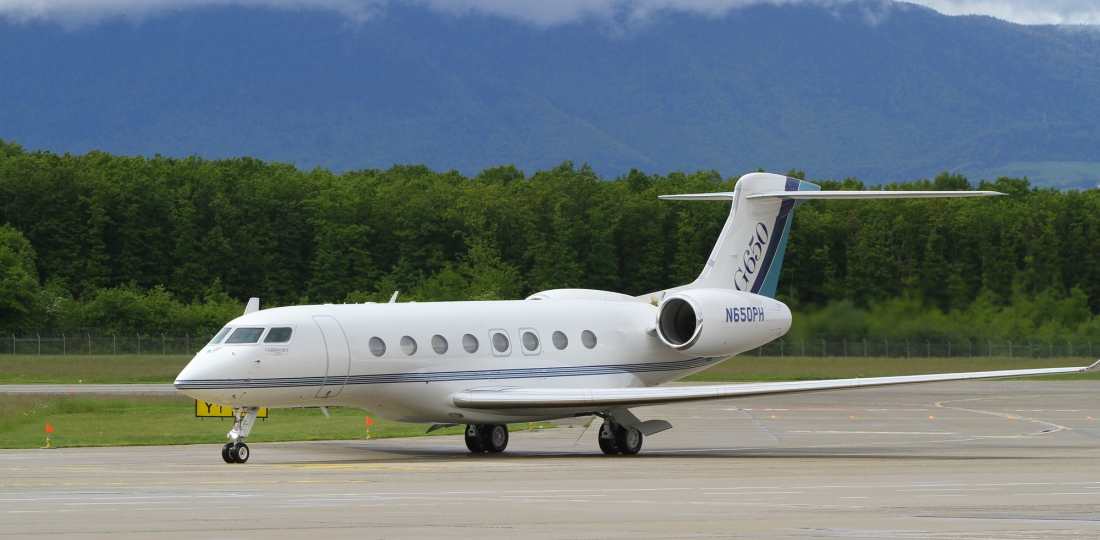
The G650 is a luxury jet with a range of 7,000 nautical miles and with space for up to 18 passengers and a price tag set at $64.5m. The two new additions to the family share some of the characteristics of the G650, in terms of size and flight deck technology, but come with a smaller price tag of $54.5m with a range of 6,200nm for the G600 and for the G500, $43.5m with a range of 5,000nm.

Although the business aviation industry is showing some regrowth, after the economic meltdown left many corporations cutting costs, the longer-range jets are clearly still in favour and the focus for speed without costly refuelling stops is a definite plus for Gulfstream.

Gulfstream announced a big deal last month for up to 50 examples of the G500, G450 and G650 with Flexjet, the US fractional aircraft operator. This is also a sector of business aviation that is fast growing in popularity as costs and operating hours are shared, rather than the outright purchase with all the additional operational costs that inevitably go hand in hand with that.

Qatar Airways also committed to an order of up to 20 G500 and G650ER aircraft for its corporate charter fleet.

Other CPDLC and HFDL Communications ProvidersThe Pakistan Civil Aviation Authority (PCAA) has signed a contract with M/s Wateen Telecom for the lease of managed services of Controller-Pilot Data Link Communications (CPDLC) via SITA’s network of voice and data solutions.

In a statement issued by the PCAA this week, the move is to ‘help radar controllers to establish a data and voice communication link from Karachi and Lahore on a 24/7 through 365 days basis.’

Using CPDLC and HF datalink communications, aircraft flying from any part of the world can communicate with the PCAA radar controller with an enhanced link that will improve the conventional VHF and HF wireless communications connectivity, particularly on long-haul flights.

The move comes as the PCAA strive to strengthen the Pakistan Airspace with CPDLC integration into the air traffic management system.

The use of CPDLC is gaining momentum as providers aim for the enhanced capabilities, reducing pilot and flight crew workload in commercial and business aircraft across the world. CPDLC can give flights access to faster routes, which can also help to manage costs in terms of fuel and airspeed, maximising operational productivity.

Gulfstream FBO Training CourseWith aviation training issues as the hot topic this month, it is interesting to note that Gulfstream are leading the way with their offer of free ramp handling training for FBOs, many of whom are deciding to become International Standard of Business Aircraft Handling (IS-BAH) registered as a global commitment to quality and safety of service provision.

The subject of formal training has been increasingly discussed with so many different types of business aircraft now available. Issues have been raised concerning a wide range of maintenance sectors, from safety for ground handlers to training for IT data systems.

Gulfstream has launched an online training course for G450/G550/650 ground-handling modules. The course is free for all FBOs handling Gulfstream aircraft and all staff are being encouraged to take part. The course is cited as an excellent initial training and recurrent training for those who already handle the aircraft. All aspects of ground servicing are covered within the modules.

Once completed, Gulfstream can issue recognition to FBOs taking part in the form of a display plaque for the facility in addition to a mention in the Gulfstream Journal Broadcast, mygulfstream.com.

All FBOs interested in taking part in the course should contact Gulfstream at the following address ~ kimberley.scott@gulfstream.com.

ExecuJet Adds New Aircraft to FleetGlobal business aviation organisation, ExecuJet Aviation Group has announced that it has added ten new aircraft to their extensive fleet of 160 jets.

Speaking from the company headquarters in Zurich, Gerrit Basson, president of Aviation Services said, “Long-range aircraft such as the Bombardier Global 6000 and Dassault Falcon 7X are proving very popular and we are emerging as one of the world’s largest operators of both aircraft types. As the business aviation market recovers, we expect aircraft of this size to remain popular. Nonetheless, we are also seeing the global market recovery reflected across the breadth of our fleet, from turboprops to rotor aircraft, with a range of additions including a Beechcraft King Air 350 and Airbus AS350 B3e helicopter in Africa. Our managed fleet in Asia is also seeing fast growth, with high interest in ExecuJet’s aircraft management offering in Asia.”

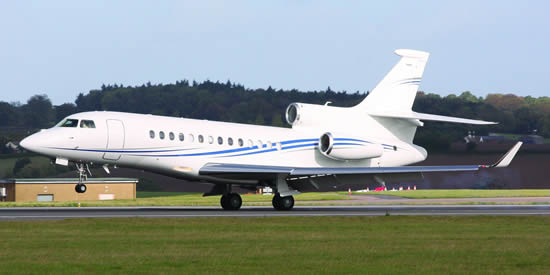
The new additions to the European fleet include two Bombardier Global 6000 aircraft and a Dassault Falcon 7X, which now brings a total number in the global fleet to seven of each model.

Mr Basson continued, “Our charter fleet continues to grow too, with the addition of two managed aircraft available for charter – a Dassault Falcon 2000S in Billund, Denmark and a Bombardier Challenger 604 based in Sydney, Australia. As we continue to receive positive feedback and referrals from our clients, we anticipate our managed and charter fleets expanding further in the coming months.”

ExecuJet has operations in Africa, Australasia, Europe, Asia, Latin America and the Middle East with a strong and growing workforce of more than 950 people.

Find out more about Rockwell Collins' ARINCDirect Features for Business AviationIn a move to further enhance efficiency for pilots, dispatchers and flight schedulers, Rockwell Collins has introduced new features to its ARINCDirect Flight Operations System (FOS).

Now available for download, the updates offer current customers access to new and improved features including flight tracking, U.S. and Canadian slot requests, online flight plan filing, graphical and text weather and overlay trips on the ARINCDirect mapping tool.

Rockwell Collins recently announced consolidation of Ascend flight information solutions and ARINC Direct services into one enhanced solution and the integration is a part of that move. With new cabin solutions and flight operations management, subscribers to the flight planning and data link can look forward to the new features.

Canada Aviation & Space Museum has announced the launch of its first mobile app in the year of the 100th anniversary of WW1.

The app will offer the public a virtual tour of the museum’s fascinating and extensive collection of World War 1 aircraft.

The museum has honoured Canada’s veterans of the First World War in this landmark anniversary year and is proud of its collection, now giving those who might never have a chance to visit the museum, the opportunity to take a look at the historic aircraft and exhibition.

The video includes a demonstration of the new mobile application by the museum’s director general, Mr Stephen Quick.

To view the video, please click here.

Inflight Connectivity Providers for Business AviationMiddle Eastern & African airlines are exploring solutions to boost passenger numbers, while making improvements to operational productivity, efficiency and connectivity across all areas of operations.

Throughout the region, the market is coming into its own with Wi-Fi connectivity at the top of the list for passenger satisfaction. Consequently, this sector is becoming competitive as companies vie for the best connections at the best prices.

WirelessG, a South African-based Wi-Fi telecommunications provider has made claims to have launched the world’s first mobile service offering customers a 3G/4G data bundle that can be used on the ground or in the air – 3G, ADSL, Wi-Fi and In-flight Wi-Fi – on a single online platform. There are still technical issues, according to their CEO.

“The Ku-band satellite service we received was relatively very stable. Our airline partner did an excellent job in supporting the service onboard,” says Mr van de Merwe. “Our major problem for two years was that we could not get our in-flight Wi-Fi services out of the ‘beta’ stage in order to meet the telecommunications uptime standards we are used to when providing Wi-Fi on the ground. In our specific case, we have had too many in-flight Wi-Fi hardware problems over our first two years.”

“You cannot fix a plane while it is flying,” he continued. “You have to wait for a suitable time at minimum opportunity cost to the airline. That can take between one week and one month. A new benchmark for in-flight Wi-Fi technology solution providers is therefore to provide and support onboard in-flight telecommunications solutions that support a telecommunications carrier grade model with reliability standards that at least match aviation operation service schedules. Maybe our standards and expectations are too high at this point in time, but we refuse to take our service out of beta until it meets our standards.”

Across the world, the demand for in-flight connectivity is increasing and not just in the cabin. Applications for real-time information on the flight deck also enhances the experience for the flight crew. Swift decision making can be facilitated by reliable connectivity, yet to be completely effective, the system required seamless connections with smooth band-switching.