Archive

Tag Archives: business aviation services

Rockwell Collins' ARINCDirect New Features with IntegrationFollowing the introduction of the new ARINCDirect portfolios for cabin services and flight support services at MEBA last month, it is clear that Rockwell Collins have fully integrated the business aviation arm of its empire.

Rockwell Collins’ Ascend Flight Information Solutions division has now been merged with the former ARINC Direct services to create the new Rockwell Collins’ ARINCDirect portfolio, which is a part of the Information Management Services division.

ARINC Direct has held firm the position within the business aviation community and now promises to deliver even greater use of the latest technological developments while holding true to the key ideology of their core business practices which has made them an industry leader over the past decade.

Rockwell Collins’ ARINCDirect highlighted four key technologies at MEBA this year:

  • Integrated weight-and-balance/performance calculations in the improved iPad application
  • A new fuel tankering feature
  • Integration with Rockwell Collins’ Flight Operations System (FOS) software
  • New passenger and flight crew connectivity solutions

Combining the proven flight planning tools and flight support services with Rockwell Collins’ own solutions, the integrated services are now designed to fit every segment of the industry, offering owners and operators flexibility with solutions that can be ‘scalable to fit the mission’ according to Brian Kruger, senior director of the ARINCDirect unit.


Providers of Aircraft Tracking Services for Business AviationThe European Space Agency (ESA) have outlined the Iris program this week in a collaboration with the Single European Sky ATM Research Joint Undertaking (SESAR JU) program, with a view to increasing the efficiency of global aircraft tracking through a satellite-based communications system.

Making improvements to future Air Traffic Management techniques is a key part of the initiative and Iris will potentially leverage a satellite-based system with current VHF ground-based communications systems that may bear the weight of overcrowded airwaves in the near future. It is planned that data link channels and ATM operations will become accessible and give new opportunities for aircraft tracking in a four-dimensional capacity – latitude, longitude, altitude and time. The system is known as 4-D trajectory management and it is hoped that it will be fully accessible by 2018.

In spite of various delays with upgrades to aircraft, the Iris program is designed to dramatically improve communications and bring the increased efficiency to operational productivity that has been sought by airlines, ATM and operators for more than 20 years.

Aircraft tracking via satellite communications will work in real time and use aircraft positioning reports, in addition to the complement of voice communications. Both continental and oceanic airspaces will be reliably covered to give truly global, uninterrupted coverage.

Business aviation enjoys the reliability of real-time aircraft tracking with providers delivering a satellite communications service over a robust system architecture, such as the Rockwell Collins’ ARINCDirect service, which provides seamless coverage via Inmarsat SwiftBroadband and Swift64 in conjunction with Iridium satellite communications. Real-time flight tracking is a sought-after service that is growing in demand, particularly since the disappearance of flight MH370 earlier this year.

As air traffic grows, demand upon the airways increases and the latest technological developments are needed to ensure utmost safety and reliability for all aircraft, both commercial and private.

Providers of Passenger Communications for Business AircraftHoneywell’s JetWave SATCOM systems will be fitted by GDC Technics in an agreement signed in Dubai last weekend for in-service Boeing and Airbus business and commercial aircraft. The system, JetWave, will be available during 2015 and supports the Inmarsat JetConnex (JX) WiFi service, promising to deliver consistent, high-speed inflight connectivity for business aircraft all over the globe.

GDC, Texan-based provider, will develop the STCs for the aircraft, including the Boeing range of business jets and Airbus corporate jets, which will enable the retrofit process to commence. The STCs will also be marketed to other completion centres and will encompass the following aircraft:

  • Airbus A319
  • Airbus A330
  • Airbus A340
  • Boeing 737
  • Boeing 747
  • Boeing 777
  • Boeing 787

Mike Beazley, vice-president of Aftermarket Sales for Business & General Aviation at Honeywell said, “Through this agreement with GDC Technics, Boeing and Airbus operators will soon be able to easily upgrade their aircraft with one of the most advanced and capable in-flight connectivity systems on the market. JetConnex will bring high speed, consistent global in-flight internet connectivity via WiFi to the cockpit and cabin and we expect to see significant demand for the technology, particularly for long haul commercial and business planes flying out of the Middle East.”

The partnership agreement the system will be focussed upon the Ka- and Ku-band, bringing greater bandwidth with Inmarsat SwiftBroadband for flight deck communications requirements.

Mohammed Alzeer, general partner of GDC Technics said, “High speed, consistent in-flight WiFi over land and sea is a technology game-changer for the industry. Through this agreement with Honeywell, bizliners and commercial air transport aircraft around the world will soon be able to access Inmarsat’s JX service.” Continuing, he echoed a sentiment that is widespread in the aviation industry, particularly in the business jet sector, “In today’s always-on society the ability to stay connected while in the air is fast becoming an expectation rather than a nice-to-have, making the JetWave hardware from Honeywell and JX service from Inmarsat an important differentiator for operators.”

Expectation is increasing noticeably in the business jet industry, as more and more executive travellers need the benefits of an ‘office-in-the-sky’ environment.

Worldwide Cabin Services ProvidersIt was announced at MEBA this month that Emteq, U.S. aviation products providers and China-based Haeco Private Jet Solutions have partnered to allow Haeco to deliver Emteq’s eConnect portfolio of IFE, Cabin Services and connectivity package, who will integrate the systems for cabin completion and refurbishment clients.

Haeco claim that the first Boeing business jet based in Asia has contracted them to engineer and integrate an eConnect Router and wireless IFE system. The install project will integrate with the existing cabin services package as an add-on, effectively upgrading the system and providing a cost-effective solution.

As passenger demands grow for greater bandwidth and seamless on-board connectivity, more and more providers of Cabin Services find themselves continually pushing the envelope with the latest technology at the most competitive prices.

Personal devices play an important role within the Cabin Services industry today as satellite communications technology delivers the reliability that is required on board the modern business jet.

Business Aviation News for EU VAT ReliefThis week terms were clarified for the temporary admission of foreign business aircraft into the EU by a published paper, confirming that conditional VAT relief will be granted.

The move followed requests from the International Business Aviation Council (IBAC), as many business aircraft operators were uncertain and needed clarification.

IBAC director general, Kurt Edwards, welcomed the paper and said, “This paper issued by the European Commission clearly resolves the confusion. As long as the operator meets the conditions for temporary admission, it can use the process to receive conditional relief from the Value-Added-Tax and Customs Duties obligations and operate to, from and within the EU.”

When a foreign-registered aircraft flies from a non-EU country and conducts flights within the EU, it can be eligible for temporary admission and therefore can claim conditional relief from taxes and duties. Foreign-registered aircraft are still subject to VAT and duty when they are permanently imported.

The latest guidelines from the EU clearly explain the previous confusion and remind operators that these conditions apply only to aircraft that are being flown for private use and do not include commercial carriers.

ADS-B Global NextGen Communications

As the deadline for Automatic Dependent Surveillance-Broadcast (ADS-B), a keystone in the NextGen initiative, approaches, concerns are being raised that the larger percentage of operational aircraft are not climbing on board. It is thought that just 10% of general aviation aircraft and a meagre 3% of major carrier aircraft will be ADS-B compliant by the end of this year.

ADS-B, within the NextGen satellite-based air traffic control system has two elements – Out, which refers to the communications sent from an aircraft to the system which relates to its position, and In, referring to area traffic information transmitted by the system itself to equipped aircraft that can receive and read the data.

The multi-billion dollar system is well into construction, with 624 radio stations deployed by April this year. There are ‘significant risks and challenges’, however, according to a system audit by the Department of Transportation which include a lack of testing, certifying avionics, monitoring and cost management, all fading into the background when it comes to actual uptake of the initiative by operators.

Many operators are concerned at the moment that the only benefit for the industry in terms of the installation of ADS-B is regulatory compliance.

The biggest concern is that non-ADS-B equipped aircraft will be prohibited from entering controlled NextGen airspace after January 2020 and a statement from the FAA reiterated their position, which clarifies their position as a firm one, “You cannot get ADS-B traffic unless your aircraft is properly equipped to participate in the ADS-B system.”

Cost-Effective Solutions for Inflight Wi-Fi ConnectivityA Canadian passenger on a Singapore Airlines flight left us all with a valuable lesson last week after he racked up a whopping $1,171 bill for Wi-Fi connectivity on a flight from London to Singapore.

Mr Jeremy Gutsche was stunned to receive the bill after purchasing a 30 megabyte internet plan for less than $30. He unknowingly used his allowance and although aware that he would be responsible for charges beyond the 30MG usage, was shocked to realise that viewing 155 pages and uploading a PowerPoint document landed him with such a huge bill.

The provider of the onboard Wi-Fi connectivity service for Singapore Airlines, Swiss-based OnAir, argued that the charges offer ‘complete transparency’, and give passengers the choice to end sessions when charges reach a certain amount and graphic data usage displays consumption.

Mr Gutsche said, “Just because someone agrees to terms and conditions doesn’t mean those terms are ethical. I think the overage model is excessive and I can imagine someone like my mom, or a family, or a backpacker going aimlessly over.”

According to Euroconsult, satellite and communications consulting firm, just 6% of flight passengers use in-flight services – perhaps for this very reason. The demand for in-flight provision in the modern world is increasing and cost-efficient solutions are becoming a growing part of the competitive side of the business for airlines worldwide.

New Releases from GulfstreamThe latest Gulfstream family of business executive aircraft promise to deliver faster speeds in addition to larger cabins and an increased range.

Unveiled earlier this year, the Gulfstream G500 and G600 look set to deliver the greatest capabilities yet and straight into the hands of the consumer with a growing need for speed over long distances. Business jets with longer range capabilities are in demand more and more as executive travellers expand their business circles in the hunt for the contracts.

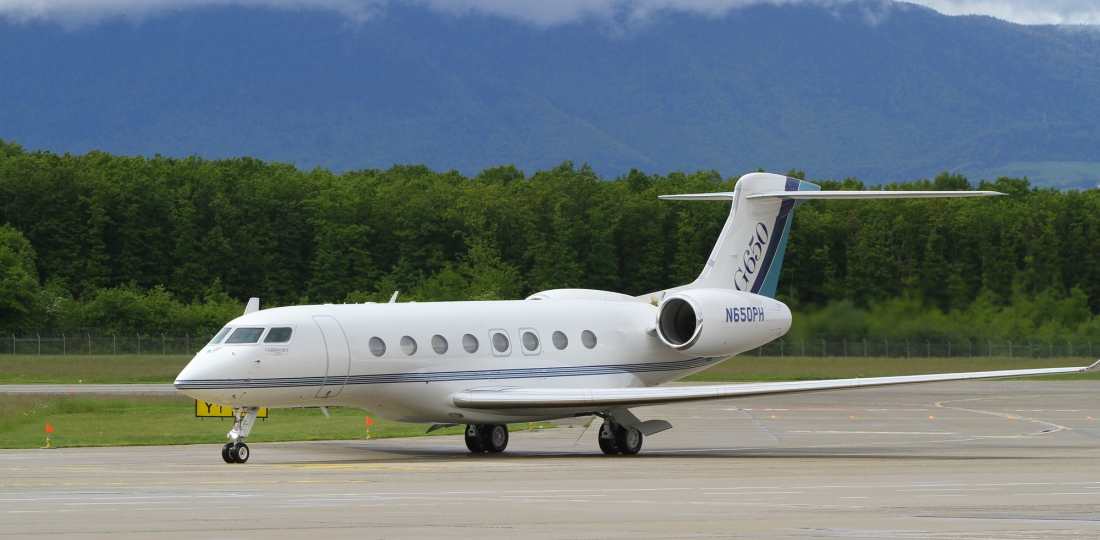
The G650 is a luxury jet with a range of 7,000 nautical miles and with space for up to 18 passengers and a price tag set at $64.5m. The two new additions to the family share some of the characteristics of the G650, in terms of size and flight deck technology, but come with a smaller price tag of $54.5m with a range of 6,200nm for the G600 and for the G500, $43.5m with a range of 5,000nm.

Although the business aviation industry is showing some regrowth, after the economic meltdown left many corporations cutting costs, the longer-range jets are clearly still in favour and the focus for speed without costly refuelling stops is a definite plus for Gulfstream.

Gulfstream announced a big deal last month for up to 50 examples of the G500, G450 and G650 with Flexjet, the US fractional aircraft operator. This is also a sector of business aviation that is fast growing in popularity as costs and operating hours are shared, rather than the outright purchase with all the additional operational costs that inevitably go hand in hand with that.

Qatar Airways also committed to an order of up to 20 G500 and G650ER aircraft for its corporate charter fleet.

Gulfstream FBO Training CourseWith aviation training issues as the hot topic this month, it is interesting to note that Gulfstream are leading the way with their offer of free ramp handling training for FBOs, many of whom are deciding to become International Standard of Business Aircraft Handling (IS-BAH) registered as a global commitment to quality and safety of service provision.

The subject of formal training has been increasingly discussed with so many different types of business aircraft now available. Issues have been raised concerning a wide range of maintenance sectors, from safety for ground handlers to training for IT data systems.

Gulfstream has launched an online training course for G450/G550/650 ground-handling modules. The course is free for all FBOs handling Gulfstream aircraft and all staff are being encouraged to take part. The course is cited as an excellent initial training and recurrent training for those who already handle the aircraft. All aspects of ground servicing are covered within the modules.

Once completed, Gulfstream can issue recognition to FBOs taking part in the form of a display plaque for the facility in addition to a mention in the Gulfstream Journal Broadcast, mygulfstream.com.

All FBOs interested in taking part in the course should contact Gulfstream at the following address ~ kimberley.scott@gulfstream.com.

ExecuJet Adds New Aircraft to FleetGlobal business aviation organisation, ExecuJet Aviation Group has announced that it has added ten new aircraft to their extensive fleet of 160 jets.

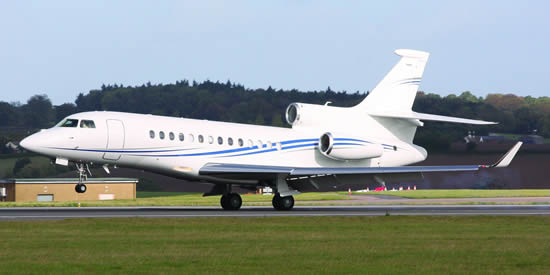
Speaking from the company headquarters in Zurich, Gerrit Basson, president of Aviation Services said, “Long-range aircraft such as the Bombardier Global 6000 and Dassault Falcon 7X are proving very popular and we are emerging as one of the world’s largest operators of both aircraft types. As the business aviation market recovers, we expect aircraft of this size to remain popular. Nonetheless, we are also seeing the global market recovery reflected across the breadth of our fleet, from turboprops to rotor aircraft, with a range of additions including a Beechcraft King Air 350 and Airbus AS350 B3e helicopter in Africa. Our managed fleet in Asia is also seeing fast growth, with high interest in ExecuJet’s aircraft management offering in Asia.”

The new additions to the European fleet include two Bombardier Global 6000 aircraft and a Dassault Falcon 7X, which now brings a total number in the global fleet to seven of each model.

Mr Basson continued, “Our charter fleet continues to grow too, with the addition of two managed aircraft available for charter – a Dassault Falcon 2000S in Billund, Denmark and a Bombardier Challenger 604 based in Sydney, Australia. As we continue to receive positive feedback and referrals from our clients, we anticipate our managed and charter fleets expanding further in the coming months.”

ExecuJet has operations in Africa, Australasia, Europe, Asia, Latin America and the Middle East with a strong and growing workforce of more than 950 people.