
Archive

Tag Archives: aviation industry

AviSec_Feature-01Zambia is getting ready to adapt its border control as a part of its program to target 17 Sustainable Development Goals (SDGs). The deployment of electronic border management will address four of these goals in Zambia’s preparations to include migration and human mobility.

Already launched last year, the e-VISA is an additional part of the program, aimed at implementing procedures to protect vulnerable migrants.

The introduction of electronic border management offers increased flexibility and efficiency, while maintaining key border security, protecting both the traveller and the country’s borders.

The latest border management systems include integration and support for evolving technologies and an additional layer of security for the advance screening of passengers and flight crew, with entry and exit management procedures streamlined to enable enhanced coordination of resources for airlines, airports, customs and immigration.

Business Aviation Blog | Cybersecurity on Aircraft – New GuidelinesLast month, the US Senate introduced the Cybersecurity Standards for Aircraft to Improve Resilience Act (Cyber AIR Act). This move requires the FAA to introduce guidelines for the aviation industry in addition to the requirement of airlines to report any and every instance of cyber-attack to the government.

In a technologically-advancing age, cybersecurity in the aviation industry is becoming increasingly necessary, with potentially disastrous consequences on the table for failure to keep information management systems secure. Millions of pieces of mission-critical data, and personal passenger information is exchanged between agencies, government bodies and aviation businesses every day, and access to it is strictly regulated.

Providers of cybersecurity solutions for key infrastructure in airports and secure facilities all over the world deliver a wide range of products and technology to ensure industry standards are met and integration remains fully managed.

Business Aviation News | EU Held Back by Regional Airport InfrastructureEBAA CEO, Fabio Gamba spoke out last week at a media event in Brussels, about the ‘lack of political will’ being at the root of the business aviation sector’s ability to make more use of regional airports in Europe.

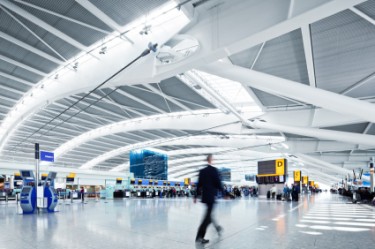
With additional use of existing technology, business aviators would gain additional options in adverse weather conditions with restricted visibility – a system that is already deployed in the U.S.

Gamba criticised the policy-making officials in the EU for what he refers to as an ‘over-focus on the role of hub airports’, and urges them to ‘display greater political will’ for the promotion of the use of technology in regional airports, which will, in turn, lead to greater support.

More about airport systems integration | Providers of airport information systemsTechnavio, leading market research reports providers, announced the top five AIS market providers that they expect will lead the way until the end of the decade.

Airport operators are coming under increasing pressure as systems become more advanced, and requirements and expectations rise. The global aviation industry is growing at a rate of more than 5% year-on-year in terms of passenger traffic, and systems integration is critical to ensure smooth and efficient airport operations.

Four of the top five providers are based in Europe, with just one, Rockwell Collins, based outside the EU.

Rockwell Collins, with its acquisition of ARINC three years ago, has gone from strength to strength in this sector of the industry with superior integration processes for airports across the world.

AviNet Airport is just one of its powerful solutions, giving operational agility to the airport environment and leveraging the proven AviNet network for seamless reliability in the messaging environment.

More about the provision of a secure platform for passenger data exchange | Business Aviation NewsThe National Migration Superintendent for Peru, Mr Boris Protozen and Richard Gil Kerlikowske, the Commissioner of U.S. Customs and Border Protection have signed a Memorandum of Understanding (MoU) to unite in the prevention of terrorism by agreeing to exchange secure flight passenger data.

The MoU, signed at the end of last month, highlights the commitment between the two organisations to fight to keep the borders of their countries, and flight operations secure. Under the Advance Passenger Information System, the Department of Homeland Security and CBP will receive secure data to allow advance passenger screening in real time.

Providers of Advance Passenger Information Systems (APIS) ensure that passenger data exchange occurs in a timely fashion to enable airlines and operators to adhere to strict mandatory conditions that surround the process, in terms of collection, storage and transmission of the data.

Peru joins an increasing number of countries around the world who are appreciating the benefits of monitoring the movements of persons of interest.

Automated Border Control Enhances Screening and Passenger Experience | Business Aviation NewsA new automated border control system is now in operation in the Caribbean at Curacao International Airport.

The new system will speed up passenger processing as the airport traffic increases significantly, with self-service gates and real-time passenger data checks, including background screening and API.

The system, provided by Vision-Box, implements an intelligent Passenger Flow system with graphical interfaces for a user-friendly experience.

Other providers of automated border control systems across the world are also experiencing a surge in requirement of self-service and automated passenger processing and screening systems as the need for greater security increases. Improving passenger experience is also high on the list of priorities for international airports on a global scale.

Visit the Brevard Zoo Website | Business Aviation BlogThe Brevard Zoo Oyster Reef Restoration project has benefited from the Rockwell Collins Green Communities program this year with a grant awarded to help with the continued provision of mats and tools to create an area that is now commonly known as the Rockwell Reef.

Green Communities helps organisations that operate in Rockwell Collins’ locale. Nominations are made by employees of Rockwell Collins, and the awards are given after consideration by a review committee.

Since 2004 the program has awarded almost $900,000 to local initiatives.

More About ARINCDirect Flight Support Services | Business Aviation BlogMetrojet, pioneering Hong Kong-based executive jet operator and maintenance provider, has selected Rockwell Collins’ ARINCDirect to provide its international trip support and services for its fleet of business aircraft.

ARINCDirect’s international trip support delivers a holistic service including flight planning, contract fuel purchasing and even concierge services for its executive clients.

Metrojet’s CEO, Bjorn Naf said, “Metrojet is dedicated to upholding the highest standards and meeting our customer’s needs in the most professional and personal way possible. ARINCDirect services provides economies of scale and cost savings that benefit both our business and our customers.”

The contract is considered a major milestone for ARINCDirect in Hong Kong, and it looks ahead to growth for international trip support services in Asia.

Cabin Connectivity from Rockwell Collins | More About ARINC Cabin ConnectThe annual Aircraft Interiors Expo saw more than 14,000 visitors this year over its three-day airing in Hamburg, Germany.

The latest innovations in cabin connectivity were shown and discussed, in addition to some incredible interior designs.

Airlines and service providers were asking new questions this year, leading us to believe that in-flight connectivity, as a relatively new requirement for the cabin, is climbing higher on the list of priorities for passengers.

Rockwell Collins’ Jeff Standerski, senior VP, said that the term IFEC (In-Flight Entertainment and Connectivity) should be referred to in the future as IFPE (In-Flight Passenger Engagement), demonstrating that the way we are thinking about cabin connectivity is changing.

Rockwell Collins’ ARINC Cabin Connect is certainly moving with the times, offering next-generation connectivity with support for personal electronic devices, and opportunities to increase in-flight revenue and enhance customer service with AirCrew Connect.

Inmarsat and MCN Cabin and Flight Deck Communications | Business Aviation NewsA joint venture has been agreed between British satellite company, Inmarsat, and Beijing’s Marine Communications and Navigation (MCN) to develop aircraft communications solutions for the cabin and the flight deck for the Chinese commercial aviation market.

Inmarsat’s latest offering, GX Aviation, will feature highly in the joint venture, providing in-flight connectivity solutions to give global coverage, as will SwiftBroadband-Safety (SB-S).

China’s aircraft passengers will soon be able to enjoy broadband at speeds comparable to the ground-based services, and will be able to use their personal mobile devices.

The agreement is expected to be finalised later this year.