Archive

Tag Archives: airport security

Business Aviation News | Aviation Security ImprovementsOn the 14th anniversary of the 9/11 terror attacks, we take a look at how those tragic events have led to improvements in aviation security and in counter-terrorism.

In the months following the attacks, physical security in airports around the world, and particularly in the US significantly tightened. The TSA immediately launched a comprehensive aviation security program and passenger and luggage screening became a major priority.

As the years have passed, technological advancements have led to the implementation of advanced passenger screening systems. The provision and requirement of Advance Passenger Information has become almost industry-standard across the world and security training has also been stepped up.

There are still threats to security on an international scale, but there is no doubt that the events of 14 years ago today have strengthened our resolve to never let it happen again.

APIS Providers for Aviation Security | Business Aviation NewsAs countries around the world join the fight against terrorism and strive to improve their border security, South Korea make changes following a test period that saw them refuse 157 travellers from Thailand.

Previously, South Korea received passenger data via APIS after flights had left the originating airport. Then, if any passenger was ‘flagged’, airlines would have to return them to the point of departure, causing delays and incurring expense.

Now, the changes suggest that South Korea will require Advance Passenger Information before tickets are issued. The information will be screened by the ministry and only after approval, will tickets be sold to the passengers.

A statement from the South Korean Ministry said that the aim is to ‘strengthen the aviation safety and border security by analysing the passenger information in advance.’

Automated Passenger Screening Technology ProvidersAll over the world, automated passenger processing and pre-processing of travellers is streamlining the way we move through airports. Physical interaction with airport personnel is reducing as an increasing number of airports move towards automation.

While the threat of terrorism is still on the increase, automated passenger processing is still a growing requirement, and many believe that aviation security is only benefitting from automation and the use of passenger screening and processing technology.

The International Air Transport Association (IATA) has estimated that numbers of worldwide airline passengers will reach more than 7 billion by 2034 and automated passenger processing and security will be the only way to efficiently handle such volume.

Providing physical security for airports | Security systems from other suppliersThe Ministry of Transport in Oman has given to go-ahead for the installation of a new integrated security system for two of the country’s airports. Muscat International Airport and the new Salalah Airport will receive a new state-of-the-art, comprehensive system to include perimeter security intrusion detection, security check points and access control, overseen by a new data management centre.

The contact has been awarded to Thales, French technology firm, who will also be responsible for training and testing as part of the deal agreed this week.

Airports across the world are stepping up their security as the threat of terrorism and smuggling increases. Airport security providers are using the latest technology to develop powerful, high performance systems to strengthen border security.

Other Security Technology ProvidersAn upgrade of western US’s airports and ports is to be deployed as part of the TSA’s mission to reinforce the security of national transport systems.

In a contract worth up to $450 million across western, eastern and Central America, the TSA mean to strengthen security under the Transportation Security Equipment Deployment Services (TEDS) project.

Lockheed Martin have received a contract for the western US and will install security technology equipment in several areas, covering airports, ports, cargo facilities and terminals.

All across the globe, borders are being strengthened and facility security providers are becoming ever-busier, as governments and agencies strive to install the latest that the security technology sector has to offer.

Find Out More About Information Management for Aviation and Facility SecurityRockwell Collins has announced another acquisition with the purchase of International Communications Group Inc. in a $50 million deal, which may rise by an additional $14 million after the deal is completed.

ICG Inc., based in Virginia, provides the aviation industry with global satellite voice and data communications products and services. Once the deal is finalised, Rockwell Collins will integrate ICG’s portfolio into its growing information management business, particularly with the latest generation of Iridium smart routers and satellite communications terminals.

CEO of ICG Inc., Mr Scott Trainum said of the acquisition, “Bringing ICG into the Rockwell Collins family is the culmination of 20 years of hard work by the dedicated team of professionals at ICG. [This is] a remarkable accomplishment by all of our people.”

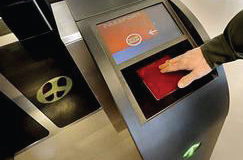
Find Out More About Biometric Airport Solutions In a bid to speed up and tighten passenger processing, as many airports around the world are, Barcelona El Prat Airport have implemented the latest technology with biometric passport control that includes fingerprint and facial recognition features.

Biometric and automated border control systems function with the use of ePassports and e-ID cards and are designed to increase passenger processing time while strengthening security and integrate with other airport systems. Many such improvements in Europe are co-financed by the European Commission as part of a ‘Smart Borders Programme’.

Barcelona’ El Prat airport will now join many other Spanish airports, including Palma de Mallorca, Malaga and Alicante with the implementation of their new system.

Other Providers of Automated Border Control SolutionsFollowing the successful implementation of automated border control gates at Prague airport in 2011, the Czech border police have agreed to expand the project, known as EasyGO.

The project expansion will involve the installation of ten more eGates in both arrivals and departures and will also involve an upgrade of the entire airport IT infrastructure which will include a new Terminal Control Centre and maintenance contract.

Using a Secunet system, Prague airport uses electronic authentication of ePassports, identity cards and uses facial scanning and comparison with electronic data.

Automated border control solutions are becoming commonplace across the world as countries strive to improve security.

Visit the O'Hare Airport WebiteGinger Evans, the recently appointed Aviation Commissioner of Chicago airports, has said that she will ensure that all solutions will be investigated and presented by the beginning of August to address the problem of noise from Chicago’s O’Hare International Airport.

Meeting with city officials and community groups, she announced that her staff ‘has developed 12 to 15 options’ for possible implementations that could address the issue. This meeting was the second of three proposed sessions for the negotiation of this issue that has been going on for decades.

She did not offer any details about the proposed measures, and insisted that her top priorities remain firmly in the conduct of safe and efficient flight operations.

Providers of Systems for Sharing Data | Advance Passenger Information Systems (APIS)In a recent article, the U.S. Department of Homeland Security have reinforced their opinion that sharing data throughout the world is critically important to track and monitor the movements of potential threats, particularly in the environment of international air travel.

Since 9/11 the issue of aviation security has been high on the agenda for the U.S. and for many of its international partners. Recently, with the spread of threat against the west from militant groups such as the Islamic State organisation, security forces all over the world are stepping up security measures in a bid to control or at least monitor the movement of its members and those who are leaving their home countries to join these terrorist groups.

To mitigate such risks to national and international security, given that the number of air travellers consistently rises by an average of 5% every year, DHS maintain that sharing data is the strongest way to monitor passengers. The introduction of Advance Passenger Information (API), a system that is fast-spreading throughout the world, gives agencies and governments the opportunity to analyse passenger data before aircraft leave the ground for their destination country on a domestic and an international scale.

DHS believes that the coordination of sharing data is as important as the collection of API. Sharing must be seamless, between airports and authorities, governments and agencies and between countries. Only then can the process of sharing data be effective.